A handyman business is one of the cheapest ways into the home service trades. If you already own tools and can fix what's broken, you can take your first paid job within weeks. Demand is steady: doors that stick, drywall holes, leaky faucets, loose railings, fixtures to hang, and long "honey-do" lists for homeowners, landlords and realtors. The two things that trip new handymen up are the law (how big a job you can do without a contractor license) and price (charging too little to survive).
1. Know your state's handyman license limits
There is no national handyman license. Each state decides how much work you can do before you need a contractor license, and many trades are licensed separately no matter the job size. Three examples:
- California: since January 1, 2025, an unlicensed person can do minor work under $1,000, up from $500. The Contractors State License Board's bulletin adds the catch: the work cannot require a permit, and the unlicensed person cannot employ anyone for the project. If either is true, a license is required even under $1,000. Unlicensed handypersons may advertise for work up to $1,000 only if the ad says they aren't licensed.
- Arizona: state law (A.R.S. 32-1121) exempts work where the aggregate contract price, including labor, materials and everything else, is less than $1,000. The exemption doesn't apply if the work requires a local building permit, or if the person's advertising doesn't include the words "not a licensed contractor."
- Washington: the Department of Labor & Industries requires all construction contractors to register, and construction work includes remodeling and repairing buildings. Registration requires a continuous surety bond ($15,000 for specialty contractors, $30,000 for general contractors), liability insurance, a Department of Revenue business registration and a fee.
Arizona's exemption also requires the work to be casual or minor, and it doesn't apply to work that is part of a larger operation or split into contracts under $1,000. Whatever your state, assume electrical, plumbing, gas and HVAC work need their own license, and that anything needing a building permit needs a licensed contractor. Check your state contractor licensing board, and your city, before you advertise.
Lead paint: if you'll disturb paint in homes or child-occupied facilities built before 1978, the EPA's Renovation, Repair and Painting rule applies to anyone paid to do that work, sole proprietors included: the firm must be certified and follow lead-safe work practices. Minor repair that disturbs six square feet or less of paint per room inside, or 20 square feet or less outside, isn't covered, but window replacement and demolition of painted surfaces are covered at any size.
2. Register the business
- Choose a structure. Many handymen form an LLC to keep claims against the business away from personal assets. The SBA notes that a sole proprietor using their own legal name doesn't need to register, but gets no liability protection.
- Register your LLC or corporation with your state and file a DBA if you use another name.
- Get a free EIN from the IRS, issued immediately online if approved.
- Get your local business license, plus contractor registration or license if your state requires it.
- Open a business bank account, and keep receipts for every tool and material.
3. Handyman insurance
Handyman work happens inside people's homes, where one slip with a drill or a leaking connection can cause expensive damage. Customers, landlords and property managers often ask for a certificate before you start.
- General liability insurance: the SBA describes it as covering bodily injury, property damage, medical expenses and lawsuit defense. This is the policy people mean by "handyman liability insurance."
- Commercial auto: your personal policy may not cover a vehicle used mainly for business.
- Tools and equipment coverage: for tools stolen from your vehicle or a job site.
- Workers' compensation: required by state law in most states once you have employees (rules and exemptions vary by state). You'll also pay state unemployment insurance tax, and a few states require short-term disability coverage.
- A business owner's policy can bundle liability and property coverage for less than buying them separately.
When you get quotes, list every kind of work you do. Policies can exclude certain kinds of work, and a claim on excluded work isn't covered. If your state requires a contractor bond (as Washington does), that's in addition to insurance: being "bonded and insured" means having both.
4. Tools and a vehicle
You probably own most of what you need. A typical starting kit:
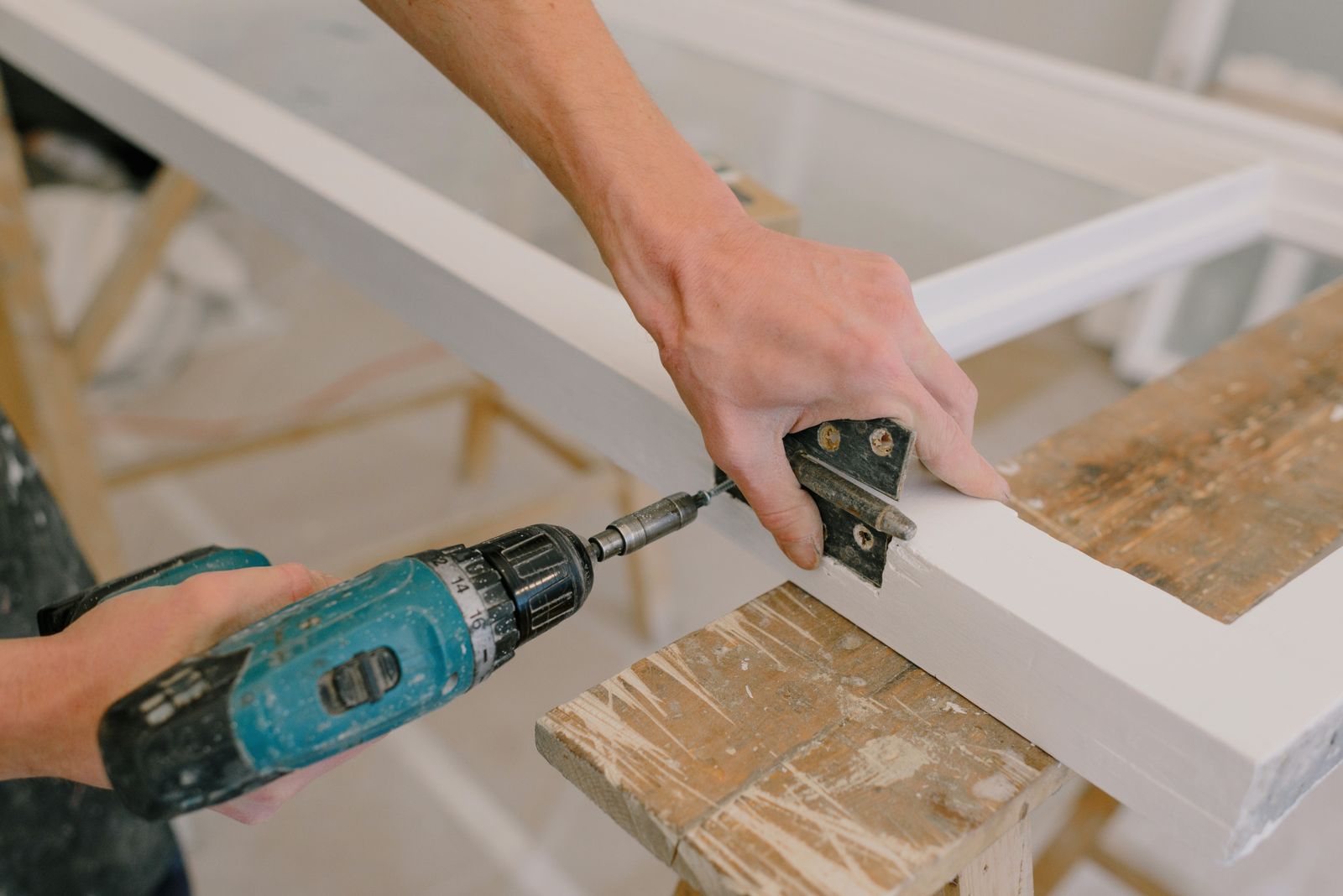
- Cordless drill and impact driver, circular saw, oscillating multi-tool, reciprocating saw
- Levels, stud finder, tape measures, squares, utility knives
- Drywall and painting tools, caulk guns, putty knives
- Basic plumbing tools for faucets, toilets and traps (where your state allows that work)
- Ladders, drop cloths, shop vac, and safety glasses, hearing protection and dust masks
- A truck or van with organized storage, so you're not driving to the store for every part
Buy tools as jobs require them, and rent the expensive specialty ones.
5. How much should a handyman charge per hour?
There's no single right number, because your rate depends on your costs, your area and how many hours you can actually bill. The way to set it is to work backward from what the business needs:
- Add up a year of business costs: insurance, vehicle payments, fuel and maintenance, tools, phone, software, marketing, licenses, accounting.
- Add the pay you want to take home for the year.
- Add taxes. As a sole proprietor or single-member LLC, you'll owe self-employment tax of 15.3% (12.4% Social Security and 2.9% Medicare) once net earnings reach $400, on top of income tax. The IRS generally expects estimated tax payments during the year if you'll owe $1,000 or more.
- Estimate your billable hours. Driving, estimates, buying materials, invoicing and marketing take a large share of the week and nobody pays for them by the hour. Count only the time on paid jobs.
- Divide the total by your billable hours, then add a profit margin for slow months, tool replacement and growth.
An example with made-up round numbers (yours will be different): $20,000 a year in business costs plus $60,000 in target pay before taxes is $80,000. If you can bill 1,200 hours a year, that's about $67 an hour before profit; add 10% and you're near $73. Bill only 900 hours and the same costs need about $89 an hour before profit. That is why billable hours matter more than any other number.
Once you have your number, check what established handymen in your area charge and how they structure it. If yours is far higher, look at costs and billable hours before you lower the rate. For comparison, the BLS reports median pay for employed general maintenance and repair workers of $23.84 an hour in May 2025, but an employee's wage doesn't carry the vehicle, tools, insurance, taxes and unbilled hours a business owner pays for.
Ways to structure your prices:
- Hourly with a minimum charge (often one or two hours) or a trip fee, so short jobs pay for the drive.
- Flat rates per task for jobs you do often (mount a TV, replace a faucet, hang a door). Customers like knowing the price; you profit by getting faster.
- Materials at cost plus a markup for the time spent buying and picking them up.
- Written estimates for anything larger than a quick fix, with scope, price and what's not included.
For painting and drywall jobs, work out the materials before you price. This calculator turns a room's size into gallons of paint:
Use our free contractor estimate template for quotes and the contractor invoice template to bill. In states with a dollar limit for unlicensed work, remember the limit counts labor and materials together.
6. How to find handyman work
- Google Business Profile listing each service and your service area, with job photos. See our Google Business Profile guide for contractors.
- Reviews after every job. You're working inside customers' homes, so trust decides most hires. See how to get more Google reviews.
- Google Local Services Ads: "Handyman" is one of the Local Services Ads categories in the United States, paid per lead. Our Local Services Ads cost guide explains how it works.
- Thumbtack and other lead sites can fill a new calendar; read how Thumbtack works for contractors before you spend.
- Nextdoor and neighborhood groups, where people ask for "a good handyman" every week.
- Repeat clients: realtors with pre-listing punch lists, landlords and property managers with turnovers, and older homeowners who want one person they trust for everything.
7. Get organized as you grow
A handyman schedule fills with many small jobs, which means many quotes, appointments, invoices and payments. Field service software keeps them in one place; see our comparison of contractor scheduling software and our list of free field service management software. For bookkeeping, our guide to QuickBooks for contractors shows which plan fits. When you start hiring, check how your state's license limits change: in California, for example, employing even one worker on a job means you need a license.
Handyman business startup checklist
| Step | Done |
|---|---|
| Check your state's handyman limit and which trades need a license | ☐ |
| EPA RRP certification if you'll disturb paint in pre-1978 homes | ☐ |
| Register the business, get an EIN, open a bank account | ☐ |
| Local business license and any contractor registration or bond | ☐ |
| General liability, commercial auto and tools coverage | ☐ |
| Tools and an organized vehicle | ☐ |
| Hourly rate from costs, pay, taxes and billable hours | ☐ |
| Minimum charge, flat-rate menu and estimate template | ☐ |
| Google Business Profile and review requests | ☐ |
| Scheduling and invoicing software | ☐ |
Ready to grow into bigger projects? Our guide to remodeling contractor marketing covers how remodelers win larger jobs.