A lawn care business is one of the simplest home service businesses to start. You can begin with a mower, a trimmer and a trailer, the work recurs every week or two all season, and every customer's yard is an advertisement to the neighbors. The catch is that it's easy for anyone to start, so prices are competitive and the businesses that last are the ones that are reliable, insured, priced from real costs and organized into tight routes.
This guide covers how to start a lawn care business, and how to grow it into a landscaping company if that's where you want to go.
1. Lawn care or landscaping: decide what you'll sell
The words get used interchangeably, but they're different businesses:
- Lawn care (maintenance): mowing, edging, trimming, blowing, spring and fall cleanups, leaf removal, aeration, overseeding, fertilizing and weed control. Recurring, route-based work with a low startup cost.
- Landscaping (installation): planting beds, sod, mulch installs, irrigation, landscape lighting, patios, walkways and retaining walls. Larger one-time jobs with higher tickets, more equipment and, in many states, a contractor license.
- Seasonal add-ons: gutter cleaning, holiday lighting and snow removal keep revenue coming in the off-season in colder climates.
Most owners start with mowing and cleanups, then add the services their customers ask for. Fertilizing and weed control earn more per visit, but they bring pesticide licensing with them (see below).
Walk your area before you decide. Look at who already mows the streets you want, what they advertise, and whether homes are on small lots (fast, many stops) or acreage (fewer stops, bigger equipment).
2. Register the business
- Choose a structure. A sole proprietorship is simplest. An LLC keeps business debts and claims separate from your personal assets. The SBA notes that a sole proprietor using their own legal name doesn't need to register with the state, but gets no liability protection.
- Register the name. Register your LLC or corporation with your state, and file a DBA if you'll work under a name other than your own or your entity's.
- Get a free EIN from the IRS. It's issued immediately online if your application is approved, and you'll need it to hire and to open a business bank account.
- Get local licenses. Most cities and counties require a general business license. Ask your state revenue department whether your services are subject to sales tax.
- Open a business bank account and keep every receipt for fuel, parts and equipment.
If you work alone as a sole proprietor or single-member LLC, you'll pay self-employment tax. The IRS sets it at 15.3% (12.4% for Social Security and 2.9% for Medicare), owed once your net earnings from self-employment reach $400 or more. Set money aside from every payment.
3. Licenses: mowing vs. chemicals vs. installation
Licensing is where lawn care businesses most often get caught out, because it depends on the services you sell.
- Mowing, trimming and cleanups: generally no state trade license, only your local business license.
- Fertilizer, weed control and pesticides: federal law requires anyone who applies or supervises the use of restricted use pesticides to be certified, and the EPA notes that many states require certification to use any pesticide commercially, restricted or not. The BLS says most states require licensing for workers who apply pesticides, usually after a test on the proper use and disposal of insecticides, herbicides and fungicides. In California, for example, a maintenance gardener who occasionally does pest control as part of a gardening business for hire must hold a Maintenance Gardener Pest Control Business license from the Department of Pesticide Regulation.
- Installation work: in California, the Contractors State License Board says gardeners who maintain landscaping on a regular paid basis generally don't need a C-27 Landscaping license, but any construction project, including landscaping, valued at $1,000 or more in labor and materials requires a state contractor license, as does any project needing a permit or workers. The CSLB lists irrigation systems, drainage, landscape lighting, patios and walkways, retaining walls, plants and sod among the projects that require one.
Rules differ a lot from state to state. Before you sell anything beyond mowing, check your state's pesticide regulatory agency (often the department of agriculture) and your state contractor licensing board, and ask your city about local rules.
4. Landscaping business insurance
Customers, HOAs and property managers will ask for a certificate of insurance, and one thrown rock can cost more than a season's profit on that yard. The usual policies:
- General liability: the SBA describes it as covering bodily injury, property damage, medical expenses and lawsuit defense. For a lawn business that means broken windows, damaged cars and a customer who trips over your equipment.
- Commercial auto: your personal auto policy may not cover a truck and trailer used for business. Tell your agent exactly how you use them.
- Equipment coverage: for mowers and tools on the trailer, which are easy to steal.
- Workers' compensation: required by state law in most states once you have employees (rules and exemptions vary by state). You'll also pay state unemployment insurance tax, and a few states require short-term disability coverage.
- Pesticide or chemical coverage: if you apply products, your state may require proof of insurance or financial responsibility for the license, and a standard policy may exclude chemical damage. California's maintenance gardener license, for example, requires proof of financial responsibility.
A business owner's policy bundles several coverages and can cost less. Get quotes from agents who insure landscapers, tell them every service you offer, and ask what is excluded.
5. Equipment: start lean
Buy for the yards you'll actually mow, and buy commercial-grade where it matters:
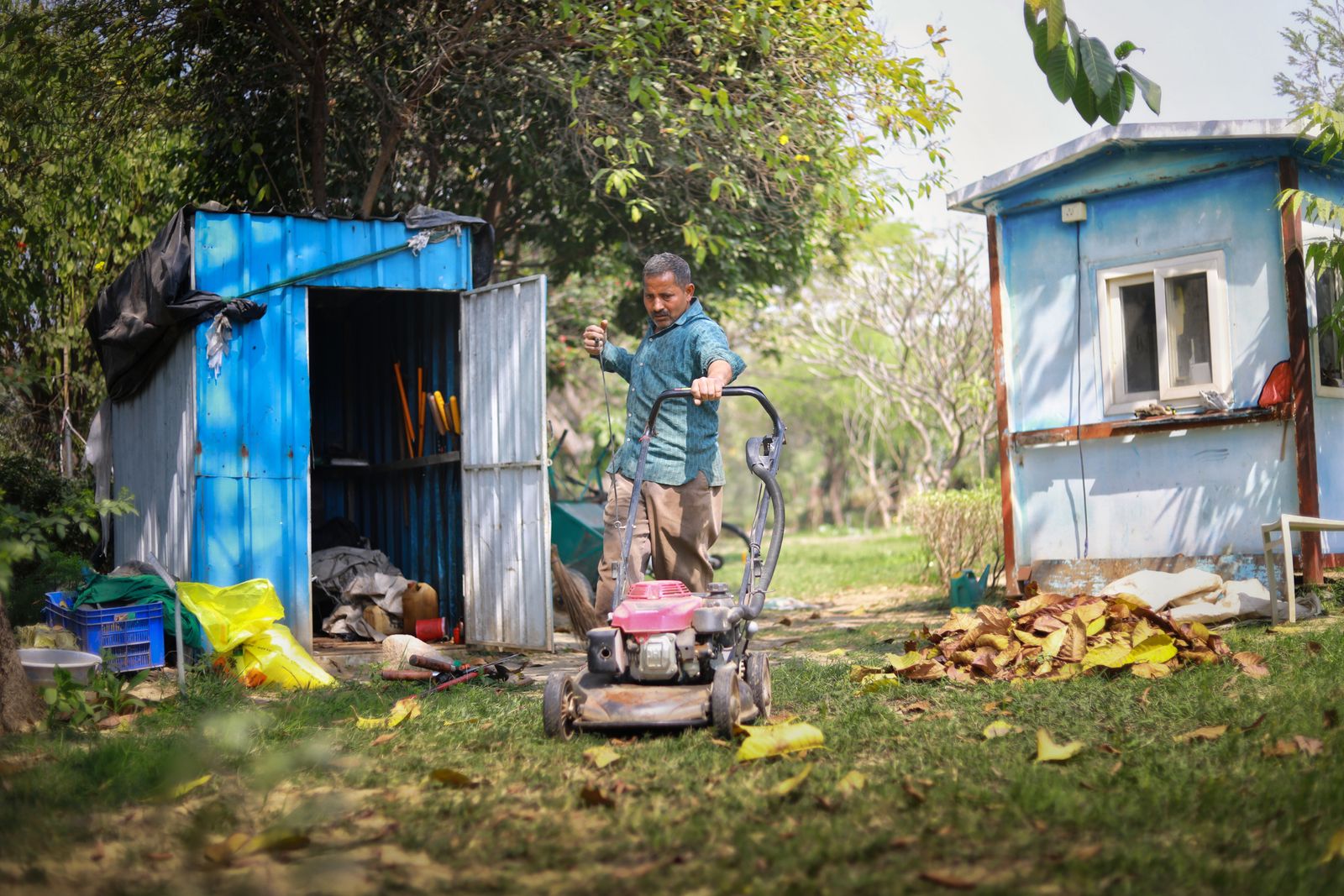
- Mower: a 21-inch push mower handles small lots and tight gates; a commercial walk-behind or stand-on mower is faster on larger lawns. Many owners start with one of each.
- String trimmer, edger and backpack blower. These run on every stop.
- Truck and trailer with ramps, plus straps, locks and a way to carry fuel safely.
- Hand tools and safety gear: rakes, shovels, pruners, eye and hearing protection, gloves and boots.
- Later: aerator, dethatcher, spreader and sprayer, hedge trimmers, leaf vacuum, or a snow plow. Rent seasonal equipment like aerators until you have enough jobs to justify buying.
Good used commercial equipment is a common way to start with little money. Keep blades sharp and do maintenance on a schedule: a mower that breaks down in May costs you a week of route income.
6. How to price lawn care
Most lawn care is priced per visit for mowing and per job for everything else:
- Per visit for mowing, set by lawn size, obstacles, slope, how much trimming there is, and travel time. Measure lawns with satellite maps before you quote, then confirm on the first visit.
- Per job for cleanups, aeration, mulch and installs, built from your time, materials and disposal fees.
- Seasonal or monthly plans that spread a season's visits into equal payments, with autopay.
- A minimum charge so small yards still cover your drive time.
Work out your own cost per hour first: fuel, equipment payments and wear, insurance, phone and software, marketing, taxes and your own pay, divided by the hours you actually spend mowing (not driving). That is the number your prices must beat. Then compare with what local competitors charge. If you plan to hire, the BLS reports median pay for grounds maintenance workers of $19.27 an hour in May 2025, and local wages vary.
For materials, calculate the quantity before you quote. Fertilizer, for example, is sold by bag coverage, and the calculator below works out how much a lawn needs:
Write every quote down with the services, frequency and price; our free contractor estimate template works for this, and our contractor invoice template for billing.
7. Build tight routes
Route density is where lawn care makes or loses money. Ten yards on two streets earn far more per hour than ten yards spread across a county, because time driving isn't time mowing. Choose a compact service area, say no (or charge more) for yards far outside it, and ask existing customers to refer their neighbors. Schedule each area on the same day every week.
As the list grows, software that handles routes, recurring visits, invoicing and card payments saves hours a week. Our guide to free field service management software covers the options that cost little or nothing, and our contractor scheduling software comparison compares paid tools.
8. Names for a landscaping business
A good name is easy to say, easy to read on a trailer at 30 miles an hour, and tells people what you do. Common patterns:
- Place + service: a town, river, valley or street name plus "Lawn Care" or "Landscaping." Local, and good for searches in your area.
- Owner's name + service: builds personal trust, but harder to sell later.
- A plain descriptive phrase about results, such as clean edges or a green yard, plus the service.
Avoid names that box you in (a single town if you'll expand, "mowing" if you'll do installs) and anything close to a competitor's name. The SBA recommends checking your name against the USPTO's trademark database before you commit, and notes that most states won't register a business name someone else already holds. Check the domain name and social media handles at the same time.
9. Find your first customers
- Google Business Profile with your service area, services and photos. See our Google Business Profile guide for contractors.
- Reviews from every happy customer, asked for the same day. Here's how to get more Google reviews.
- Neighbors of your customers: door hangers on the same street (never in the mailbox), a yard sign with permission, and a small offer for neighbors.
- Nextdoor, local Facebook groups and referrals from realtors, property managers and HOAs.
Our landscaping marketing ideas cover 25 ways to get more lawn care customers in detail, including the mailbox rule and Google Local Services Ads for lawn care.
Lawn care business startup checklist
| Step | Done |
|---|---|
| Decide your services: mowing and cleanups, chemicals, installs | ☐ |
| Pick a name, check the state register, USPTO and domain | ☐ |
| Register the business, get an EIN, open a bank account | ☐ |
| Local business license and any sales tax registration | ☐ |
| Pesticide license if you'll fertilize or spray; contractor license for installs where required | ☐ |
| General liability, commercial auto and equipment insurance | ☐ |
| Mower, trimmer, edger, blower, trailer and safety gear | ☐ |
| Cost per hour, per-visit prices and a minimum charge | ☐ |
| Compact service area and a weekly route plan | ☐ |
| Google Business Profile, door hangers and review requests | ☐ |
Other route-based businesses you can run alongside lawn care: see how to start a gutter cleaning business and how to start a pressure washing business.