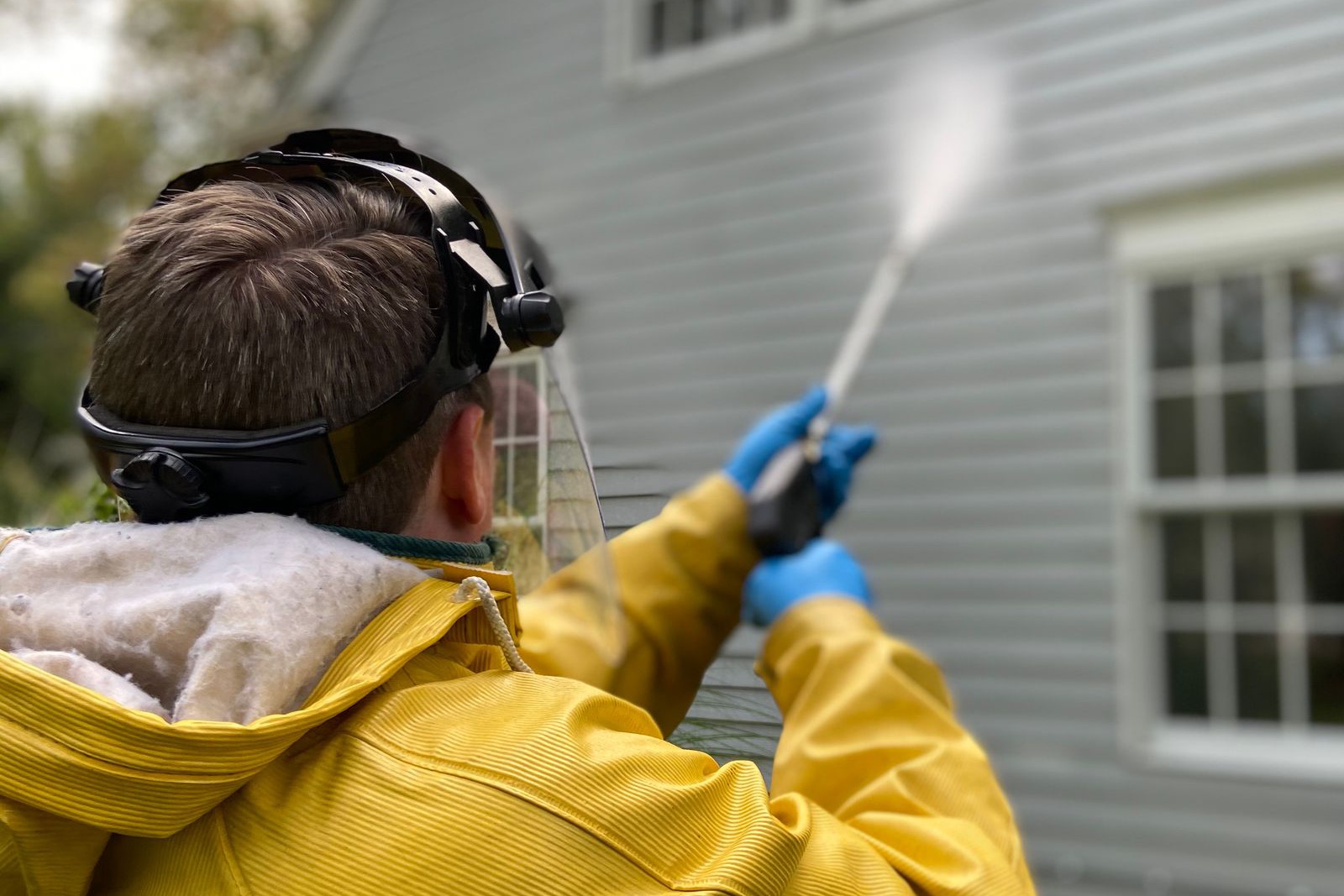
Pressure washing is one of the few home service businesses you can usually start without a trade license, with equipment that fits on a trailer or in a truck bed, and with results customers can see the moment you finish. Before-and-after photos sell the next job. The work is seasonal in colder climates, and margins depend on working fast and pricing right, so it pays to plan the business, not just buy a machine.
1. Choose your services
Start with the services you can do well and add more as you gain experience and equipment:
- Flatwork: driveways, sidewalks, patios and pool decks. The most common entry point: a surface cleaner makes it fast and even.
- House washing: vinyl, brick, stucco and painted siding. Usually done by soft washing (low pressure plus cleaning solutions), because high pressure can damage siding, force water behind it, and strip paint.
- Decks and fences: wood needs low pressure and care; many customers also want sealing or staining afterwards.
- Roof cleaning: soft washing only, never high pressure, and work at heights brings safety requirements and higher insurance costs.
- Commercial work: storefronts, dumpster pads, drive-throughs, parking garages and fleet washing. Steady recurring contracts, often at night, with stricter wash water rules.
- Add-ons: gutter brightening, window cleaning and holiday lighting help fill the off-season.
2. Plan the business and check your market
Search Google Maps for "pressure washing near me" and look at the top results in your area: what services they list, whether they publish prices, how many reviews they have and how good their photos are. Note what's missing: no one doing soft washing, no one serving a particular suburb, or no one offering commercial maintenance plans.
Think about seasons too. In colder states, exterior cleaning slows down or stops in winter; plan how you'll cover fixed costs then, through savings, add-on services or commercial contracts.
3. Register the business
- Choose a structure. A sole proprietor using their own legal name doesn't need to register anywhere, according to the SBA, but gets no personal liability protection. Many owners form an LLC with their state for that protection.
- Register a DBA if you'll work under a business name that isn't your legal name.
- Get an EIN from the IRS. It's free and issued immediately online if approved; you'll need it to hire employees and usually to open a business bank account.
- Get local licenses. Most places don't have a pressure washing license, but you'll typically need a general business license from your city or county. Some states require contractor registration for work on residential property, and some charge sales tax on certain services. The SBA suggests checking federal, state and local requirements.
4. Insurance: don't skip it
Pressure washing can break windows, etch concrete, strip paint, flood a basement through a gap in the siding, or kill plants with runoff from cleaning solutions. Insurance protects you from one bad job wiping out the business.
- General liability insurance for damage to customers' property and injuries to others. Commercial clients and property managers will ask for a certificate of insurance.
- Commercial auto for the truck or van and, if you have one, the trailer.
- Inland marine or equipment coverage for your machines and trailer if they're stolen or damaged.
- Workers' compensation: required by state law in most states once you have employees (rules and exemptions vary by state). You'll also pay state unemployment insurance tax, and a few states require short-term disability coverage.
Tell the insurance agent exactly what you do, including roof cleaning and chemical use, so the policy actually covers it.
5. Buy the right equipment
The core kit for a residential pressure washing business:
- A professional pressure washer. Gas-powered, belt-drive units with a commercial pump last far longer than homeowner machines. Flow rate (gallons per minute, GPM) matters as much as pressure (PSI): higher GPM cleans and rinses faster.
- A surface cleaner for flatwork. It cleans evenly and many times faster than a wand alone.
- Hoses, quick connects, nozzles (tips) and extension wands. Carry spares; a burst hose ends the day.
- A soft washing system for siding and roofs: a separate low-pressure pump, chemical tank and hose, or a downstream injector to start with.
- Cleaning solutions: sodium hypochlorite for soft washing, surfactants, degreasers for oil stains, and rust removers. Follow the label and safety data sheet for every product, and protect plants by wetting them before and rinsing after. If you sell soft washing or roof cleaning to kill algae, mold or moss, ask your state department of agriculture's pesticide program whether you need a commercial applicator license, and use products labeled for that use.
- A water tank if your water supply at job sites is limited, and a trailer or truck setup to carry it all.
- Safety gear: eye protection or a face shield, chemical-resistant gloves and clothing for cleaning solutions, non-slip boots and hearing protection. High-pressure water can cause serious injuries; never spray toward power lines, outlets or light fixtures.
- Wash water control: drain covers or berms, and a vacuum or pump to collect water where required (see the next section).
Buying a good used machine, or starting with flatwork and adding soft washing later, keeps the first investment down.
6. Know the rules for wash water
This is the part new owners most often miss. In most places, storm drains aren't connected to a treatment plant: whatever runs into the gutter flows to the nearest creek, river or lake. Wash water from driveways and buildings carries dirt, oil, detergents and cleaning chemicals with it.
Local rules differ, but they tend to agree on the basics. Sacramento County's stormwater program, for example, says pressure washing wastewater should never be discharged to a storm drain, that drains should be temporarily covered or the path to them blocked, and that with the property owner's permission the water can go to a sanitary sewer clean-out or, in some cases, a landscaped area, as long as it doesn't overflow or contain hazardous substances. Commercial jobs, like restaurant dumpster pads or parking garages, often have stricter rules.
Before you take paid work, look up your city or county's stormwater or "illicit discharge" rules, and build the cost of water control into your prices.
7. Price your jobs
Pressure washing is usually priced per job, built from one of these:
- Per square foot for flatwork and decks: measure the area, multiply by your rate, and add extra for heavy staining, oil spots or sealing.
- Per linear foot or by house size for house washing, adjusted for stories, siding type and access.
- Minimum job charge so small jobs still cover your drive time and setup.
- Hourly or per visit for recurring commercial maintenance.
Set your rates from your real costs: fuel, chemicals, water, equipment wear, insurance, marketing, vehicle costs, and your time including travel and setup. Then compare with local competitors. Bundles sell well (house wash plus driveway plus walkway), and so do annual maintenance plans for homes and businesses. Send written quotes with the scope and any exclusions; our free contractor estimate template works for this.
8. Find your first customers
- Google Business Profile: list your services and service areas, and post before-and-after photos from every job. It's where most local customers will find you. See our Google Business Profile guide for contractors.
- Reviews: ask every happy customer, the same day. Here's how to get more Google reviews.
- Yard signs and door hangers: a clean driveway next to a dirty one is the best ad you'll ever have. Put a sign in the yard (with permission) and hang door hangers on the neighbors' doors. Our guide to yard signs for contractors covers what to print.
- A simple website with your services, photos, areas and a quote form. Our contractor website checklist shows what to include.
- Commercial contacts: property managers, HOAs, restaurants and retail centers need recurring cleaning and value a reliable vendor.
- Partnerships with painters, deck builders, roofers and real estate agents who need surfaces cleaned before their own work or a sale.
9. Run it like a business from day one
Open a business bank account, keep receipts for equipment and chemicals, and set aside money for taxes from every job. Software for quotes, scheduling, invoicing and card payments saves time as you grow; our guide to field service management apps for small businesses compares the main options. Take photos before and after every job: they protect you if a customer claims damage, and they're your best marketing.
Pressure washing startup checklist
| Step | Done |
|---|---|
| Choose your first services (flatwork, house washing, commercial) | ☐ |
| Check local competitors, prices and seasonality | ☐ |
| Pick a name and structure, register, and get an EIN | ☐ |
| Get local business license and check contractor and sales tax rules | ☐ |
| Get liability, auto and equipment insurance | ☐ |
| Buy equipment, chemicals and safety gear | ☐ |
| Look up your local wash water rules | ☐ |
| Set prices from your real costs, with a minimum job charge | ☐ |
| Create your Google Business Profile with before-and-after photos | ☐ |
| Order yard signs and door hangers | ☐ |
| Ask every customer for a review | ☐ |