Pest control is one of the few home services where customers pay on a schedule whether or not they see a bug. A homeowner signs up for a recurring plan, and you come back every few months for years. That makes it a strong business to own, but the barrier is higher than for most trades: you apply regulated pesticides in people's homes, so states license the business and the person behind it, usually after years of documented experience. This guide covers how the licensing works, what three large states require, then insurance, equipment, pricing recurring service and building routes.
1. How pest control licensing works
Pest control licensing has two layers.
Federal certification standards. Federal law requires that anyone who applies or supervises the use of restricted use pesticides (RUPs) be certified. RUPs aren't available to the general public. EPA sets the certification standards, but states, territories, tribes and some federal agencies run the actual programs: your state's pesticide regulatory agency is the one that certifies you, under a plan EPA has approved. The federal standards, strengthened in 2017, set a minimum age of 18 for certified applicators and a maximum recertification interval of five years.
Certification is by category. The federal rule (40 CFR 171.101) lists commercial categories such as ornamental and turf pest control, right-of-way, public health and fumigation; the one most home service pest control falls under is industrial, institutional, and structural pest control, which covers pesticide use in and around homes, food-handling businesses, schools, hospitals, warehouses and other buildings.
State licensing. EPA notes that many states also require certification for commercial use of pesticides that aren't restricted use. In practice, a pest control business that treats homes for pay needs a state license no matter which products it uses, and states license both the company and the people. The Bureau of Labor Statistics puts it simply: state laws require pest control workers to be licensed, and most states require training and an exam.
Whatever your license, the product label governs how you use each product. EPA's wording: "It is a violation of Federal law to use this product in a manner inconsistent with its labeling." That's where the industry phrase "the label is the law" comes from.
2. Three state examples: Texas, Florida, California
Requirements differ a lot by state, so look up your own state's pesticide lead agency before you plan anything. Three large pest control markets show the range.
Texas
The Texas Department of Agriculture's Structural Pest Control Service licenses businesses and applicators. It issues four license types: a business license, certified applicator, technician and apprentice registration.
- Business license: the business must designate a commercial certified applicator as its responsible certified applicator, who can't serve another business license or location, and it needs an applicator certified in each category it works in. The commercial business license fee is $300. TDA is explicit that you may not conduct any business or advertise until the license is issued.
- Insurance: under 4 Tex. Admin. Code § 7.123, at least $500,000 of bodily injury and property damage coverage with a total annual aggregate of at least $1,000,000, filed on TDA's own certificate form. TDA also requires the insurer to delete the care, custody and control exclusion.
- Certified applicator: hold a technician license for at least six months and have done pest control under a certified applicator for at least 12 of the last 24 months (or document 12 months of pest control employment in the past 24, or hold an associate or bachelor's degree in a biological science such as entomology). Pass the general standards exam and a category exam with 70% or better. The license fee is $125.
- Employees: apprentices register within 10 days of starting training, and employees must be registered within 10 days of hire.
- Continuing education: certified applicators earn CEUs every calendar year except the first.
Florida
The Florida Department of Agriculture and Consumer Services (FDACS) licenses pest control under Chapter 482, Florida Statutes.
- Business license: each business location must be licensed, carry the required insurance and employ full-time a Florida certified operator certified in each category the business works in. The license fee is $300, and each employee identification card is $10.
- Insurance minimums: bodily injury of $250,000 per person and $500,000 per occurrence, and property damage of $250,000 per occurrence and $500,000 aggregate, or a combined single limit of $500,000.
- Categories: General Household Pest and Rodent Control; Termite and Other Wood-Destroying Organisms Control; Lawn and Ornamental Pest Control; and Fumigation.
- Certified operator: over 18 and pass FDACS exams ($300 per category). To qualify for the exam by experience, you need a high school education or equivalent and three years as a service employee of a licensee, at least one of them under a Florida licensee immediately before applying. With a qualifying degree (20 semester hours in entomology, botany, agronomy or horticulture), one year as a service employee of a Florida licensee is enough. Horticulture, botany or agronomy education only qualifies you for Lawn and Ornamental.
FDACS also offers limited certifications (such as limited commercial landscape maintenance), but none of them allows operating a commercial pest control business.
California
The Structural Pest Control Board (SPCB) licenses structural pest control in three branches: Branch 1 fumigation, Branch 2 general household pest control, and Branch 3 wood-destroying pest control (termites and similar, by chemicals or structural repairs).
- Licenses: an Applicator (entry level, Branches 2 and 3) and a Field Representative can only work for a registered company. An Operator license is the one that lets you own and run your own company, or act as qualifying manager for another owner. Operator applicants complete Board-approved pre-operator courses, submit training and experience documents and a Live Scan background check, and pass the exam. The exam application is $100 and the Operator license $150.
- Company registration: the company needs a qualifying manager licensed as an Operator in each branch it registers for (a Branch 2 company needs a Branch 2 Operator). Registration costs $120.
- Insurance and bond: at least $500,000 of general liability insurance (Business and Professions Code § 8692) and a $12,500 bond from an admitted surety (§ 8697), plus a workers' compensation certificate, or a statement of exemption if you have no employees.
The pattern is the same in all three: the license holder needs exams and, in most states, real field experience. If you don't have it yet, the fastest legitimate path is to work as a technician for an established company while you earn it.
3. Choose the services you'll offer
What you offer decides which categories you need, so pick before you test:
- General household pests: ants, roaches, spiders, silverfish, and the recurring plans built around them. This is where most new companies start.
- Rodents: inspection, baiting, trapping and exclusion work (sealing entry points), often sold as a separate program.
- Termites and wood-destroying organisms: higher-ticket work with its own category or branch in many states, and in some markets real estate inspections.
- Mosquito and outdoor treatments: seasonal add-ons in warm, humid markets.
- Lawn and ornamental pests: a separate category in many states, and closer to lawn care.
- Fumigation: a specialized category with its own training; rarely where a new company starts.
- Commercial accounts: restaurants, food-handling businesses, property managers and offices, usually on monthly service.
4. Register the business
- Choose a structure. Many owners form an LLC to separate business liabilities from personal assets. The SBA notes that a sole proprietor using their own legal name doesn't need to register, but gets no liability protection.
- Register your LLC or corporation with your state, and a DBA if you use another name. Pest control license applications usually ask for the business name and tax ID, so settle them first. Texas ties the business license to its tax ID; a change means a new license.
- Get a free EIN from the IRS online.
- Apply for the state pest control business license, plus any local business license your city or county requires.
- Open a business bank account.
If you work alone at first, plan for taxes: as a sole proprietor or single-member LLC you'll owe self-employment tax of 15.3% on net earnings of $400 or more, on top of income tax.
5. Pest control insurance
Your state may set the minimum, as the three examples above do, but the minimum is a floor, not a recommendation. A property manager or commercial client may ask for higher limits on the certificate.
- General liability: the SBA describes it as covering bodily injury, property damage, medical expenses and lawsuit defense. For pest control, ask specifically how the policy treats pesticide application, pollution and damage to property in your care. Texas's requirement to delete the care, custody and control exclusion is a good example of why it matters: the damage you're most likely to cause is to the home you're working in.
- Commercial auto: your service vehicle carries products and equipment every day.
- Workers' compensation: required by state law in most states once you hire. California requires either a certificate or a formal exemption to register the company.
- Bonds: required in some states for the company license (California's is $12,500).
Get quotes from agents who write pest control policies, list every service you'll offer, and check exclusions for termite work or fumigation if you'll do them.
6. Equipment and a service vehicle
A one-truck start doesn't need much, but it needs the right things:
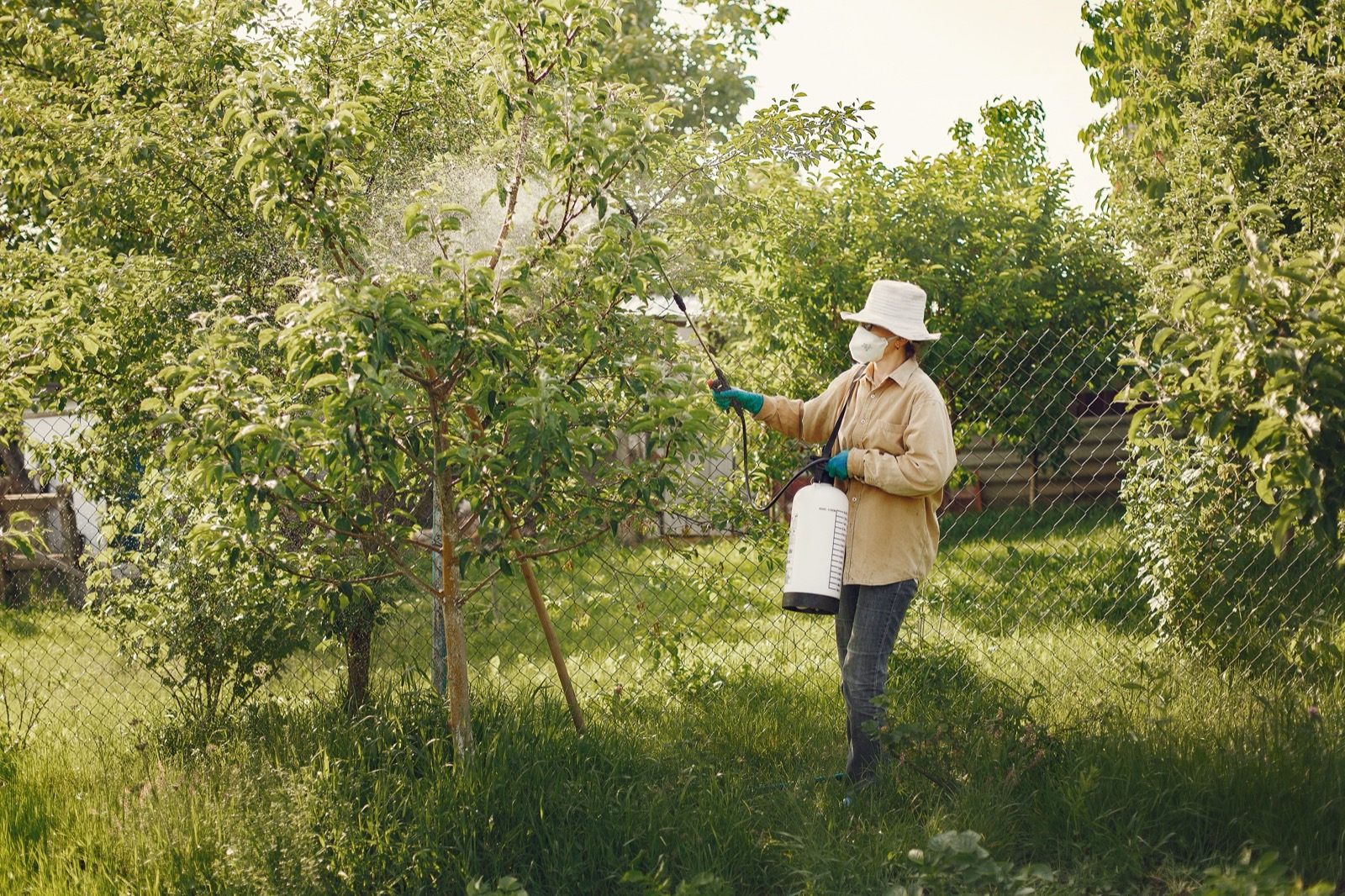
- Application equipment: compressed-air or pump sprayers, a backpack sprayer for exteriors, a power sprayer later, hand dusters and bait guns.
- Monitoring and rodent supplies: glue boards and monitors, tamper-resistant bait stations, snap traps and exclusion materials.
- Inspection tools: a strong flashlight, inspection mirror, moisture meter for termite and moisture work, and a ladder.
- Personal protective equipment as each product label requires: gloves, eye protection and respirators where the label calls for them.
- A vehicle with a secure, organized way to carry and lock up products, plus spill cleanup materials. Check your state's rules on pesticide storage, transport and vehicle identification before you outfit the truck.
Buy products as your services need them. Every product you carry has a label you have to follow, so a smaller lineup you know well is easier to use correctly than a shelf of everything.
7. How to price recurring pest control
Most pest control companies earn their money from plans, not one-off visits. A typical structure:
- An initial service priced higher than a regular visit, because the first treatment and inspection take longer.
- Recurring visits on a set schedule, often quarterly for general pest, bi-monthly or monthly in heavy-pressure areas or for commercial accounts.
- Free callbacks between scheduled visits if pests come back, which is what customers are really buying.
- Separate pricing for termite treatments, rodent exclusion, mosquito seasons and one-time jobs.
To set the recurring price, work out what a stop costs you. An example with made-up round numbers (yours will be different): a technician day that costs $400 in wages, vehicle, products, insurance and overhead works out to about $33 a stop if you service 12 homes that day, and about $57 a stop if a scattered route only lets you reach seven. Your price per visit has to cover that, plus office time, callbacks and profit.
That's why route density matters as much as price. Before you set prices, check what established companies in your area charge for an initial service and a quarterly plan, and what's included. If your number comes out well above theirs, look at your stops per day before you lower the price.
For comparison, BLS reports median pay of $45,250 a year ($21.75 an hour) for employed pest control workers in May 2025. When you hire, that wage is only part of what a technician costs you.
8. Build routes, not just a customer list
A recurring business lives on routes. A few habits from the start save hours later:
- Pick a compact service area and turn down far-flung one-off jobs that would wreck a route day.
- Assign neighborhoods to days. Mondays in one zone, Tuesdays in the next, so each new customer joins an existing route.
- Sell where you already go. Every customer is a reason to knock on neighbors' doors or leave a door hanger on the same street.
- Plan capacity. With 12 stops a day and about 60 working days in a quarter, one technician can serve roughly 720 quarterly customers. Knowing that number tells you when to hire.
Routing and recurring scheduling are what pest control software is built for: see our guide to pest control software.
9. Get your first customers
- Google Business Profile with your services, service area, license number and real photos. Our pest control SEO guide covers profiles, pest pages and licensing claims in detail.
- Reviews after every visit; they're the main way a homeowner chooses who comes into their house with pesticides. See how to get more Google reviews.
- Seasonal timing: ants and termite swarms in spring, mosquitoes in summer, rodents in fall. Our pest control marketing ideas cover seasonal campaigns, door hangers and plan offers.
- Local Services Ads, where pest control is an eligible category and you pay per lead. See how Local Services Ads pricing works.
- Partners: property managers, real estate agents, HOAs and restaurants bring repeat work.
Make the recurring plan your default offer and treat one-time jobs as the way in.
10. Get organized as you grow
Once you have a few hundred plan customers, the work is scheduling, routing, service records and billing on autopay. If your state requires application records, software that logs products, amounts and locations on each visit earns its cost. Our pest control software guide compares the options; for bookkeeping, see QuickBooks for contractors.
Pest control business startup checklist
| Step | Done |
|---|---|
| Find your state's pesticide lead agency and its license types | ☐ |
| Get the experience or education the certification requires | ☐ |
| Pass the certification exams for every category you'll offer | ☐ |
| Register the business, get an EIN, open a bank account | ☐ |
| Liability insurance at or above the state minimum, bond if required | ☐ |
| State pest control business license (no advertising before it's issued in Texas) | ☐ |
| Commercial auto, workers' comp when you hire | ☐ |
| Equipment, PPE and secure product storage on the vehicle | ☐ |
| Initial service price and recurring plan price from cost per stop | ☐ |
| Compact service area and route days | ☐ |
| Google Business Profile, reviews and a seasonal marketing plan | ☐ |
| Scheduling, routing and service records software | ☐ |