Pest control searches are specific and seasonal. Nobody searches for "pest services"; they search for "termite inspection", "mice in the attic" or "wasp nest removal", usually the same day they find the problem. And the problem changes with the calendar: ants and termite swarmers in spring, mosquitoes and wasps in summer, rodents moving indoors in fall. Pest control SEO is the work that puts your company in front of those searches, in the towns your technicians already drive, and then turns the first call into a recurring plan.
Most of it is work an owner or office manager can do. Google publishes what it looks at, and the rest is a routine. This guide covers what's specific to pest control. For the general version every trade follows, see our local SEO guide for contractors; for promotions, referrals and ads, see our pest control marketing ideas.
How Google picks which pest control companies to show
Google says local results are based mainly on three things:
- Relevance: how well your Business Profile matches what someone is searching for.
- Distance: how far your business is from the person searching.
- Prominence: how well known your business is. Google says more reviews and positive ratings can help your local ranking.
Distance you can't change. Everything below works on relevance (telling Google exactly which pests you treat, and where) and prominence (reviews, links and mentions). Google also says there's no way to request or pay for a better local ranking.
Two things set pest control apart. First, the customer is often uneasy about letting someone spray inside their home, so your profile and website have to answer the safety question and show you're licensed. Second, the money is in recurring service, so the pages that matter most aren't only the emergency ones, but also the page that explains your plan. If you're still getting licensed, start with how to start a pest control business.
Step 1: Set up your Google Business Profile for pest control
Your Google Business Profile is what shows in the map results for "pest control near me" and "exterminator {town}". For a pest control company, the details that matter most:
- Categories. Google says to select a specific category from its list, to use "a few" categories rather than one for every product or service, and that you can't create your own. Type "pest control" into the category field and pick the most specific match for your main business as the primary category. Add others only for work that's a real, regular part of the business, such as wildlife or animal control if you're licensed and equipped for it. If you change categories later, Google may ask you to verify again.
- Your real business name. Google's guidelines don't allow unnecessary information in the business name. "Ridgeline Pest Control", not "Ridgeline Pest Control – Termite & Bed Bug Exterminator Tampa".
- Service area, not a fake address. If customers don't come to your office, Google says to hide the address and set a service area. Google says the service area generally shouldn't extend farther than about 2 hours of driving time from where you're based. A rented mailing address where you don't operate isn't eligible.
- One profile per business. Google's guidelines say there should only be one profile per business. Extra profiles to "cover" more towns put all of them at risk.
- Services listed one by one: general pest control, termite inspection and treatment, rodent control and exclusion, bed bug treatment, mosquito and tick treatment, wasp and hornet removal, cockroach control. Use the words customers search with.
- Photos of your own work: technicians in uniform, branded trucks, exclusion work (sealed entry points, door sweeps, vent screens), bait stations and inspection findings. Skip close-ups that would make a customer's home look bad, and never show a customer's address.
If you also run Google Local Services Ads, "Pest control services" is one of its US categories; our Local Services Ads cost guide explains how it charges.
Step 2: Build a page for each pest
This is the core of pest control SEO. One "Services" page can't match "termite inspection", "bed bug heat treatment" and "how to get rid of mice in walls" at the same time. Give each pest or service its own page:
- Termites: signs (swarmers, discarded wings, mud tubes, damaged wood), how you inspect, the treatment methods you actually use, what a warranty or renewal covers, and real estate inspections if you do them
- Rodents: signs, trapping, exclusion work, attic cleanup if you offer it, and what follow-up visits look like
- Bed bugs: how to confirm them, how the customer prepares the home, your treatment method, and how many visits it takes
- Mosquitoes and ticks: what a yard treatment involves, how often it's repeated, and when the season starts in your area
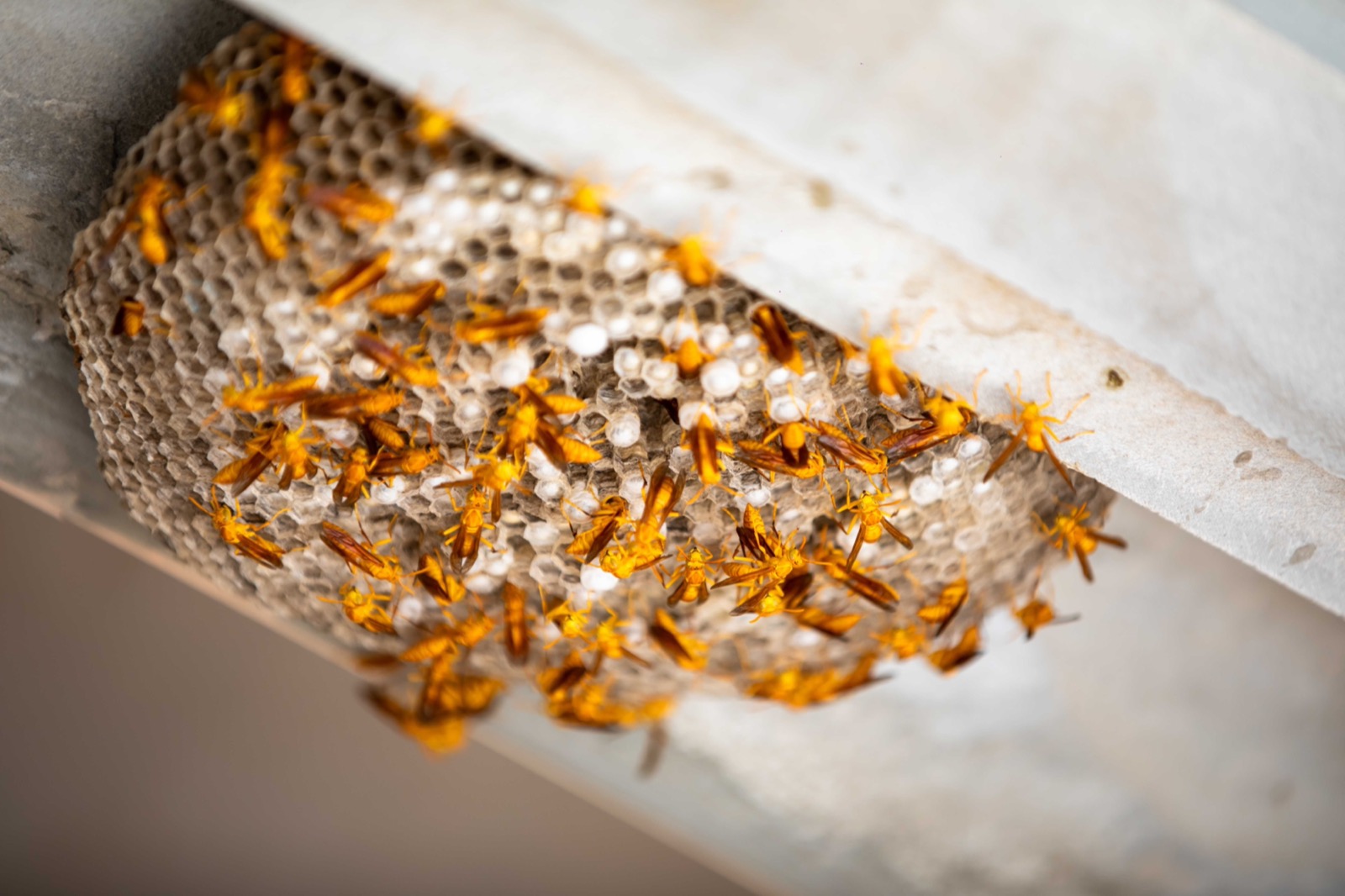
- Stinging insects: wasps, hornets and yellowjackets, with what to do (and not do) before you arrive
- Ants, cockroaches, spiders and whatever else is common where you work
- Wildlife, commercial accounts or fumigation, only if they're a real part of your business and you hold the license for them
Each page should answer the questions your office already hears on the phone, describe your process step by step, say how you prepare the home and protect children and pets, and put the phone number and booking button at the top. Give each page a title that says what it is, such as "Termite Inspection and Treatment in Lakeland, FL | Ridgeline Pest Control". Google's SEO Starter Guide says a good title is unique to the page, clear and concise, and accurately describes its contents.
Use your own photos of the pests and the signs you find in customers' homes, with descriptive file names ("termite-mud-tubes-crawlspace.jpg", not "IMG_2231.jpg") and alt text that says what the photo shows. Google's image guidelines call alt text the most important attribute for giving it information about an image.
Step 3: Publish seasonal content before the season
People search for a pest when they see it, and that happens in waves. A page published the week the swarmers appear has little time to be found, so plan a year ahead:
- A seasonal pest calendar for your area: which pests show up in which months where you work, and what homeowners notice first. This varies a lot by region, so write it from your own call log rather than a national list.
- Answers to the questions customers ask each season: "Are flying ants termites?", "Why are mice coming inside in the fall?", "How do I know if it's a wasp nest or a hornet nest?"
- One page per topic, updated every year. Refresh the same URL each season instead of publishing a new "Spring 2027 ant season" post that competes with last year's.
- Profile posts at the start of each season, pointing to the page.
Each seasonal page should end with the matching service page and your recurring plan, because a customer reading about spring ants is a good candidate for year-round service.
Step 4: Give your recurring plan its own page
Recurring plans (quarterly, bimonthly or seasonal) are the core of most pest control businesses, and people do search for them ("quarterly pest control", "pest control plan"). Build one clear page per plan, or one page that compares them:
- What each visit covers, season by season, and which pests are included and which cost extra
- What happens if pests come back between visits, for example free re-service calls if that's your policy
- How starting works: the initial visit, how long it takes, what the customer needs to do
- Contract terms in plain words: how long the agreement runs, how to cancel, and how billing works
- Price or "from" price if you can publish it; if not, say what the price depends on
Link to this page from every pest page and seasonal page. Ways to promote the plan, such as first-visit offers and pre-season reminders, are in our pest control marketing ideas.
Step 5: Show your license on the site, and watch your claims
Pest control is licensed at the state level, and the license is one of the first things a careful customer checks. Put the business license number in the footer of every page and on the contact page, link to your state's license lookup if it has one, and introduce your technicians with their certifications.
Some states also set rules for what pest control advertising must and mustn't say, and a website counts. Texas is a clear example. Under the Texas Department of Agriculture's rules:
- A website is advertising. Advertising includes written, audio, audiovisual and digital media and other electronic communication to the public.
- You need the license first. A business can't advertise pest control services without a structural pest control license.
- Every ad must include the business name as it appears on the business license. Keep your website and Business Profile name consistent with it.
- No safety claims. Ads can't call pesticides "safe", "harmless" or "non-toxic to humans and pets", with or without "when used as directed", and can't claim pesticides you apply are "environmentally friendly", "organic" or "contain all natural ingredients".
- No implied government endorsement, such as "EPA Registered" or "EPA Approved".
- No claims you can't back up at the time you make them.
- License number on vehicles. The business license number must be permanently displayed on vehicles used for customer contact or service, preceded by "Texas Pest Control License #" or "TPCL #". If your truck photos are on the site, they should show it.
Other states have their own rules, so check your state pest control regulator before writing service pages. What works everywhere: describe what you do to protect children, pets and gardens, rather than promising a treatment is "100% safe".
Step 6: Cover your towns without doorway pages
Pest control companies often serve a metro area or a few counties, and it's tempting to clone a "Pest Control in {City}" page fifty times. Google's spam policies list "pages targeted at specific regions or cities that funnel users to one page" as doorway abuse, and blocks of text listing the cities a page is trying to rank for as keyword stuffing.
A smaller set of town pages with something genuinely local works better:
- The pests you actually see most there: termite pressure in older neighborhoods, mosquitoes near water, rodents in older housing stock
- Reviews from customers in that town
- Which technicians or branch serve the area, and typical scheduling
- HOA, apartment or commercial work you do there
If you don't have real work in a town yet, list it on your main service area page instead. Our guide to service area pages for contractors shows how to build them.
Step 7: Build a steady flow of reviews
Reviews count toward prominence, and they answer the trust question better than anything you write. The best moment to ask is after the first visit has visibly worked: text your Google review link when the customer confirms the problem is under control, and reply to every review.
Reviews that mention the pest, the town and the technician by name are the most useful to the next customer. Don't script them, though: Google's content policy doesn't allow businesses to offer incentives for reviews, to selectively ask only happy customers, or to have staff solicit reviews with specific content. Our guide on how to get more Google reviews covers the routine.
Step 8: Earn links from your industry and your town
Links from other websites count toward prominence. For pest control, the realistic sources are:
- Association directories. The National Pest Management Association runs a "find a pest control professional" directory on PestWorld.org that lists its members by ZIP code. Most states also have a pest control association with a member directory. If you're a member, make sure your listing is complete and matches your Business Profile.
- Real estate partners: agents, inspectors and title companies that list vendors for termite or wood-destroying insect inspections
- Property managers and HOAs that list approved vendors
- Local news, for example when you explain what to do about a tick or mosquito season
- Sponsorships of local teams or events that list sponsors on their website, and your chamber of commerce
Don't buy links or trade links for the sake of ranking. Google's spam policies list buying links for ranking purposes and excessive link exchanges as link spam.
Step 9: Keep your details consistent everywhere
Search engines cross-check your business name, address and phone number across the web. Make sure they match on your Business Profile, your website, Bing Places, Apple Business, Yelp, the directories above, and your state license record. If you change phone numbers, use call tracking or move, update all of them.
Step 10: Add LocalBusiness structured data
Structured data describes your business name, phone number, hours and website in a format search engines can read. Schema.org has specific types for some trades (Plumber, Electrician, RoofingContractor and others), but not for pest control, so use LocalBusiness with your details. Google recommends the most specific LocalBusiness type possible, and it says features that use structured data aren't guaranteed to appear in search results. Review markup is only recommended for sites that collect reviews about other businesses, so don't mark up your own testimonials to try to get stars.
Step 11: Measure plans, not rankings
Rankings change depending on where the searcher is standing, so they're a noisy measure. Track what pays:
- Business Profile performance: calls, website clicks and direction requests
- Google Search Console (free): which searches show your site and which pages get clicks
- New recurring plans by source: ask every new customer how they found you and record it in your software. Our field service management app comparison covers tools that track this.
A pest page that brings in a few plan signups a month is worth far more than one that brings one-time calls, because each plan customer pays again every visit.
Pest control SEO mistakes to avoid
- Keywords or city names added to the business name on Google
- Several Business Profiles, or a "location" at an address where you don't operate
- One "Services" page instead of a page for each pest
- New seasonal posts every year instead of updating the same page
- Dozens of cloned city pages with only the town name changed
- "Safe for kids and pets", "eco-friendly" or "EPA approved" claims your state's rules don't allow
- No license number on the website
- Reviews bought, incentivized or collected only from happy customers
- Bought links or link packages
If you hire pest control SEO help
Most of the steps above are work you can do in-house. If you'd rather hire an agency, Google's advice on choosing an SEO applies: no one can guarantee a #1 ranking on Google, be wary of firms that email you out of the blue, and ask what results they expect, in what timeframe, and how they measure success. Ask to see pest control companies they've worked with and look those companies up on Google yourself. Make sure whoever writes your pages knows your state's advertising rules.
Keep ownership in your company's name: the Business Profile, the domain, the website and Search Console, with the agency added as a user. And judge them on recurring plans signed, not on a ranking report.
Once the calls come in, our pest control software comparison covers the tools that keep application records and run recurring routes. For the rest of the picture, see our pest control marketing ideas and the contractor website checklist.