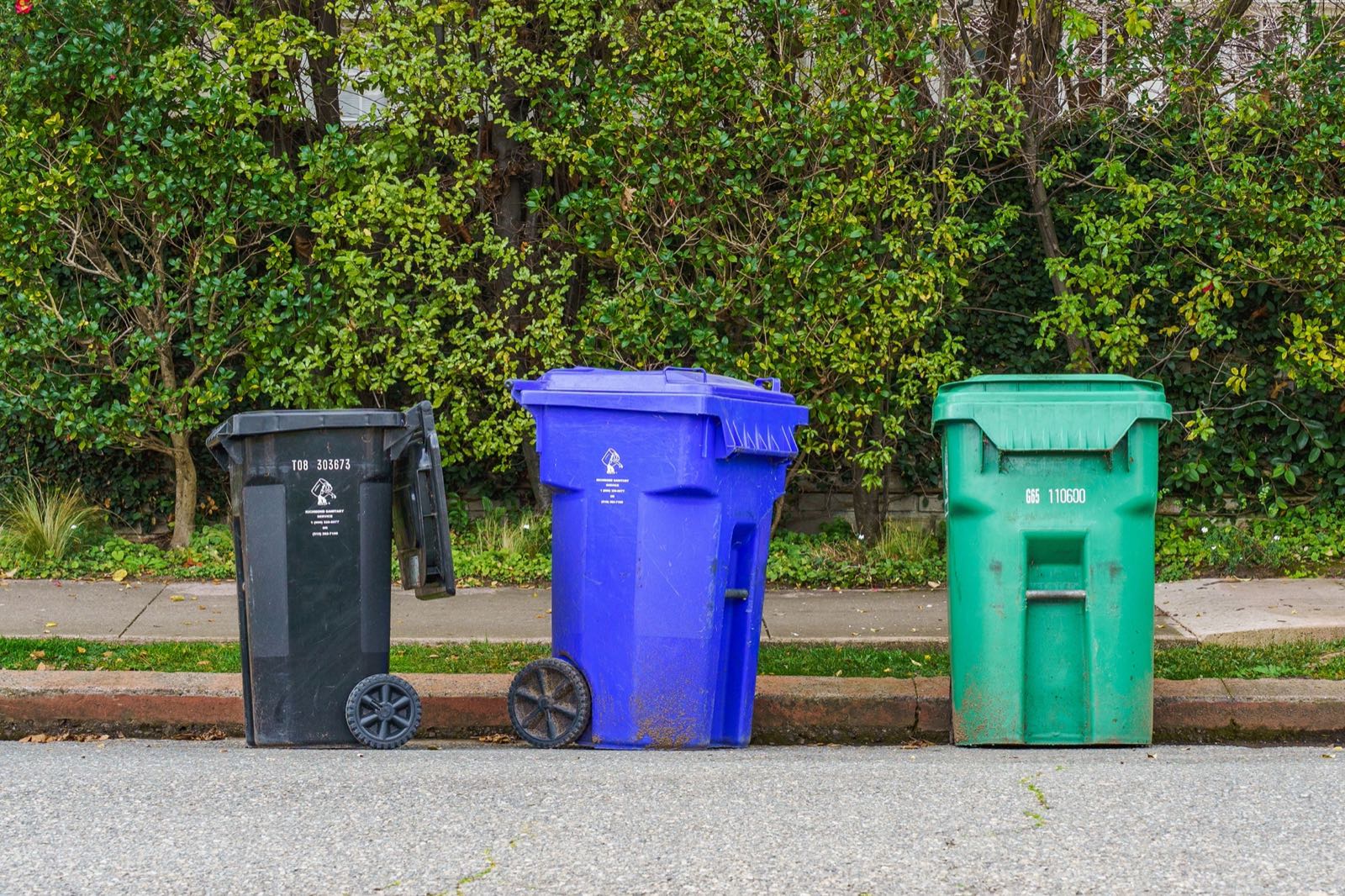
A trash can cleaning business (also called a trash bin or bin cleaning business) washes the wheeled bins that homeowners roll to the curb every week. The model is simple: you follow the garbage truck on pickup day, clean and deodorize each customer's empty bin right at the curb, and bill them on a subscription. Done well, it's recurring revenue on tight routes with no appointments to schedule and nobody needing to be home. Done badly, it's a truck full of smelly water and a stormwater violation. Here's how to start one the right way.
1. Understand how the business works
Residential bin cleaning is done on trash pickup day, because that's the one time the bins are empty and sitting at the curb. Your route follows the collection schedule: if a neighborhood gets picked up on Tuesday, you're in that neighborhood on Tuesday, a little behind the truck.
That makes route density the most important number in the business. Ten customers on one street are worth far more than ten customers spread across town, because your time goes into driving and setup, not washing. The usual way to grow is to saturate a few neighborhoods rather than chasing every inquiry.
Typical services:
- Recurring residential cleaning: monthly, every other month or quarterly, often with trash and recycling bins priced separately.
- One-time cleans: a deep clean for new customers, move-ins and move-outs, or after a bin has sat dirty for years.
- Add-ons: deodorizing, cleaning the pad or spot where the bins are stored, and bin liners or bags sold at cost plus a margin.
- Commercial and multi-unit work: apartment and condo bins, HOA common areas, dumpster pads and restaurant containers. This often overlaps with pressure washing and comes with stricter wash water rules.
2. Check your market and map the collection schedule
Before you buy anything, find out:
- Who collects trash where you live. Your city or county, or the private hauler, usually publishes pickup days by address or by zone. Get the map; it becomes your route plan.
- Whether residents use wheeled carts. Bin cleaning works best where every home has standard wheeled carts set out at the curb.
- Who already offers it. Search Google Maps for "trash can cleaning near me" and note which neighborhoods competitors serve, whether they publish prices and how many reviews they have.
- Where the dense pockets are. Subdivisions, HOAs and neighborhoods with smaller lots let you clean more bins per hour.
Pick one or two pickup days and the neighborhoods on them to start, and market there until each route is full.
3. Register the business
- Choose a structure. According to the SBA, if you do business as yourself under your legal name, you won't need to register anywhere, but you could miss out on personal liability protection and legal and tax benefits. Many owners form an LLC with their state for that protection.
- Register a DBA if you'll use a business name that isn't your legal name; the SBA says most states require it.
- Get an EIN from the IRS. It's free, and if your application is approved online, it's issued immediately. You'll need one to hire employees or to operate as a partnership or corporation, and many banks ask for one when you open a business account.
- Get local licenses. There's rarely a bin cleaning license, but you'll typically need a general business license from your city or county, and possibly a permit for discharging wastewater (see section 5). Check state sales tax rules for services too.
4. Choose your equipment
You have two broad options.
A purpose-built bin cleaning trailer or truck. These systems usually combine:
- a hot water pressure washer: hot water cuts through grease and grime faster than cold,
- a fresh water tank, so you're not using customers' hoses,
- a wastewater reclaim tank that collects the dirty water from the wash area,
- a lift or tipper that turns the bin upside down over a rotating spray head, so you clean the inside without reaching in,
- a generator or engine to run it all.
They're fast, keep the street clean and look professional, which helps sell the service. They're also a major purchase. Prices vary widely by manufacturer, tank size and options, so get written quotes from several builders and ask what's included (lift, heater, tank sizes, warranty, training).
A simple pressure washer setup. Some owners start with a pressure washer, a water tank and a way to capture runoff, such as a containment mat and a pump or wet vac into a holding tank, all in a truck bed or small trailer. It costs less but is slower, more physical work, and you still have to capture every drop of wash water. Don't start with a plan that lets dirty water run into the gutter.
Either way you'll also need:
- Cleaning and deodorizing products suited to the job. Follow each product's label and safety data sheet, and choose products your wastewater disposal site will accept.
- Safety gear: eye protection, waterproof gloves, non-slip boots and hearing protection. Hot, high-pressure water and bin contents (food waste, pet waste, broken glass) are a real injury and infection risk.
- Spare hoses, fittings and nozzles, and a plan for what happens when the rig breaks down mid-route.
5. Handle wastewater the right way
This is the rule that matters most in bin cleaning. The water coming out of a trash can is full of food waste, bacteria, grease and cleaning products. It can't go in the street.
Here's why. The EPA explains that polluted stormwater is commonly carried through municipal separate storm sewer systems (MS4s) and often discharged untreated into local water bodies. Under the Clean Water Act, discharging pollutants into waters of the United States from a point source requires a permit, and EPA notes that discharging pollutants into a municipal storm sewer may also need a permit depending on what you discharge. For a mobile bin cleaner, the rule that applies in practice is the local stormwater ordinance that implements this, which is why the details vary by city. Cities run programs to find and stop illicit discharges, which EPA describes as, in general, any discharge into a storm drain system that isn't entirely stormwater.
Local rules are where the details live, and they vary. San Diego's stormwater fact sheet on trash cans and dumpsters, for example, says it's illegal to discharge pollutants from trash cans into the storm drain system, with penalties of up to $10,000 per day per incident, and that if wet cleaning is necessary, all wash water must be contained, captured and disposed of appropriately.
In practice:
- Capture all wash water in a reclaim tank or containment system. Nothing goes in the gutter, even "just a little rinse."
- Ask your local wastewater utility how to dispose of it. Where, how and whether you may discharge reclaimed wash water is a local decision, and it may need a permit or prior approval, especially if the water contains cleaning chemicals. Don't dump it into a home's drain or a manhole without permission.
- Screen out solids (food scraps, bag pieces) and dispose of them as trash.
- Keep records of where and when you dispose of wastewater. If a neighbor calls the city about your truck, you'll want them.
Call your city or county stormwater department before your first paid job and ask specifically about mobile bin cleaning. Make proper disposal part of your sales pitch: customers like hearing that nothing goes in the storm drain.
6. Get insured
Bin cleaning happens in the street, around parked cars, other people's property and moving traffic, with heavy equipment and hot water.
- General liability insurance protects against financial loss from bodily injury and property damage. HOAs and property managers often ask for a certificate of insurance.
- Commercial auto insurance for the truck (ask your agent), and make sure it covers the trailer and the equipment mounted on it.
- Equipment coverage (ask your agent about inland marine coverage) for an expensive trailer rig if it's stolen or damaged.
- Workers' compensation, unemployment and disability insurance once you have employees. The SBA notes that businesses with employees must carry these, and requirements vary by state.
Tell the agent exactly what you do, including street work and wastewater hauling, so the policy covers it.
7. Set your prices
The common model is recurring plans charged per bin per visit, in a few common structures:
- Monthly plans for customers who want the bin always clean.
- Every-other-month or quarterly plans at a slightly higher price per clean.
- One-time cleans at the highest price per bin, since they're often the dirtiest and don't come with future visits.
- Extra bins (recycling, yard waste) at a discount per additional bin.
Build your price from your costs, not from a competitor's flyer. Count fuel, water, cleaning products, wastewater disposal fees, equipment payments and repairs, insurance, software, marketing, and your time including driving and dumping the reclaim tank. Then compare with what local competitors advertise.
Here's a worked example with made-up numbers to show how route density drives the math. Suppose your costs to run the rig for a route day come to $250, and you charge $25 per bin per monthly visit:
| Paying bins on the route that day | Revenue | After $250 route cost |
|---|---|---|
| 10 | $250 | $0 |
| 25 | $625 | $375 |
| 40 | $1,000 | $750 |
The same truck and the same day earn very different amounts depending on how many bins you clean on that one route. Use your own costs and local prices; these figures are only an illustration.
Charge subscriptions automatically by card so you're not chasing small invoices every month. Send one-time and commercial customers a written invoice; our free contractor invoice template works for that.
8. Win HOA, multi-unit and property manager accounts
Bulk accounts fill a route in one sale. Ideas to pitch:
- HOA-sponsored discounts: the HOA promotes your service to residents in exchange for a group rate, and every signup lands on the same route.
- Apartment and condo communities: many bins in one place, often with a dumpster pad that also needs pressure washing.
- Property managers with single-family rentals: cleaning bins between tenants, or on a schedule as part of upkeep.
Bring a certificate of insurance, a one-page description of how you capture and dispose of wastewater, and references. Put agreements in writing, including frequency, price per bin, billing and how either side can cancel.
9. Market your service
Marketing a trash can cleaning service is hyperlocal: one street at a time.
- Door hangers on the streets you already serve, on pickup day, so neighbors see your truck and your flyer the same morning.
- Yard signs at customers' homes (with permission) and magnets or wraps on your truck and trailer. See our guide to yard signs for contractors.
- Nextdoor and neighborhood Facebook groups: follow each group's rules on business posts, and let happy customers recommend you.
- Google Business Profile: list your service areas, post before-and-after photos, and ask every customer for a review. Our Google Business Profile guide for contractors and how to get more Google reviews cover the details.
- Referral credits: a free clean for the customer whose neighbor signs up, which also builds density.
- Cross-selling: if you also pressure wash or offer other cleaning services, offer bin cleaning to those customers and vice versa.
10. Use software built for recurring routes
A spreadsheet works for your first few dozen customers. After that you'll want software that handles:
- Recurring jobs by frequency (monthly, every other month, quarterly),
- Routes grouped by pickup day and optimized stop order,
- Online signup and automatic card billing,
- Reminders so customers leave the bin at the curb after pickup,
- Photos and notes per stop, including "bin not out" so you can handle skipped visits fairly.
General field service apps handle recurring service plans, and route-based tools are built around daily routes. Our guides to field service management apps and cleaning business software compare options and pricing.
Trash can cleaning startup checklist
| Step | Done |
|---|---|
| Get the trash collection schedule and map pickup days by neighborhood | ☐ |
| Check local competitors and choose your first routes | ☐ |
| Pick a name and structure, register, and get an EIN | ☐ |
| Get a local business license | ☐ |
| Ask the city about storm drain rules and wastewater disposal | ☐ |
| Get quotes for a bin cleaning trailer or a simpler setup with reclaim | ☐ |
| Get liability, auto and equipment insurance | ☐ |
| Set per-bin prices for monthly, quarterly and one-time cleans | ☐ |
| Set up recurring billing and route software | ☐ |
| Create your Google Business Profile and order door hangers and yard signs | ☐ |
| Pitch HOAs and property managers on your routes | ☐ |