A cleaning business is one of the cheapest home service businesses to start. You don't need a trade license in most places, the equipment fits in a car, and every happy customer can turn into a recurring booking every week or two. That low barrier also means competition, so the businesses that grow are the ones that look professional from day one: insured, easy to book, clear about prices, and reliable.
This guide walks through the steps in order, from choosing your market to hiring your first cleaner.
1. Decide what kind of cleaning business you're starting
"Cleaning business" covers very different businesses. Pick one to start with; you can add others later.
- Residential (house cleaning, maid service): recurring weekly, biweekly or monthly cleans, plus one-time deep cleans. Easiest to start solo, customers book quickly, and word of mouth works well.
- Move-in / move-out cleaning: one-time, larger jobs that come through real estate agents, landlords and property managers.
- Short-term rental turnovers: cleaning between guests for Airbnb and vacation rental hosts. Tight schedules, but steady work in tourist areas.
- Commercial / janitorial: offices, clinics, retail and schools, usually after hours on a contract. Bigger contracts and steadier revenue, but clients expect higher insurance limits, written contracts and sometimes bonding. See how to start a commercial cleaning business.
- Specialty services: carpet cleaning, window cleaning, post-construction cleanup, or pressure washing. These need more equipment and know-how, but face less price competition.
Most owners start with residential cleaning, because it needs the least money and the first customers often come from people you already know.
2. Check demand and your competitors
Before you spend money, search Google Maps for "house cleaning near me" in your area and look at the top 10 results. Note their prices (many publish starting prices), how many reviews they have, what services they list, and how easy it is to book. You're looking for a gap: an area they don't cover well, a service they don't offer, or simply that none of them answers the phone or offers online booking.
The SBA's free business guide and its local counselors (SCORE mentors and Small Business Development Centers) can help you with market research and a simple business plan at no cost.
3. Choose a business structure and register
You have two common options:
- Sole proprietorship: the simplest. The SBA notes that if you do business under your own legal name, you don't need to register anywhere, but you also don't get personal liability protection.
- LLC: registered with your state, usually through the Secretary of State. It separates business debts and lawsuits from your personal assets. Fees and annual reports vary by state.
If you'll use a business name that isn't your legal name ("Sparkle Home Cleaning"), you'll generally need to register it as a DBA ("doing business as") with your state, county or city.
Then get an EIN (employer identification number) from the IRS. It's free on irs.gov and issued immediately online if approved; ignore websites that charge for it. You'll need an EIN to hire employees, and most banks ask for one to open a business account.
4. Get licenses, permits and tax registrations
Cleaning isn't a licensed trade in most places, but you'll typically still need:
- A general business license or registration from your city or county
- A sales tax permit if your state taxes cleaning services (rules vary: some states tax some cleaning services, others don't)
- Home occupation approval if you run the business from home and your city requires it, since zoning rules can apply even to home-based businesses
The SBA suggests checking federal, state and local requirements. For a cleaning business there's rarely a federal license, so start with your state's business portal and your city or county website.
5. Get insured (and decide about bonding)
Insurance is what makes clients comfortable letting you into their homes and offices. The coverage to look at:
- General liability insurance: covers damage to a client's property and injuries to others. Expect clients, property managers and commercial accounts to ask for a certificate of insurance.
- Workers' compensation: required by state law in most states once you have employees (rules and exemptions vary by state). You'll also pay state unemployment insurance tax, and a few states require short-term disability coverage.
- Commercial auto: if you drive to jobs with equipment, ask your agent whether your personal policy covers business use.
- Bonding: a janitorial or business service bond pays the client if an employee steals from them. It's rarely required by law, but some clients ask for it, and "bonded and insured" is a common line on cleaning company websites. Only say "licensed" if you actually hold a license.
Get quotes from at least two agents who work with cleaning businesses. Ask what limits your commercial clients will expect before you choose a policy.
6. Set your prices
Cleaning businesses price in three common ways:
- Flat rate per clean: based on home size (bedrooms, bathrooms, square footage) and service type. This is what most residential customers want to see.
- Hourly: simple to explain, but customers worry about the clock running, and you earn less as you get faster.
- Per square foot: common for commercial and post-construction cleaning.
Whatever method you choose, start from your full cost, not from what competitors charge:
- Add up your monthly fixed costs: insurance, software, phone, marketing, vehicle costs.
- Estimate your cost per job: supplies, travel time and mileage, and labor (your own time counts, even before you hire).
- Add your profit margin and the taxes you'll owe.
- Compare the result with local prices. If you're well below the market, raise your prices; if you're well above, check your time per job.
Charge more for the first clean of a recurring customer (homes are dirtier the first time) and offer a lower price per visit for weekly or biweekly schedules, since recurring clients are where cleaning businesses make most of their money. Our contractor estimate template works for written quotes on larger jobs like move-out or post-construction cleaning.
7. Buy supplies and equipment
Start with what you need for the services you sell and add specialty equipment when you have jobs that need it. A typical residential starter kit:
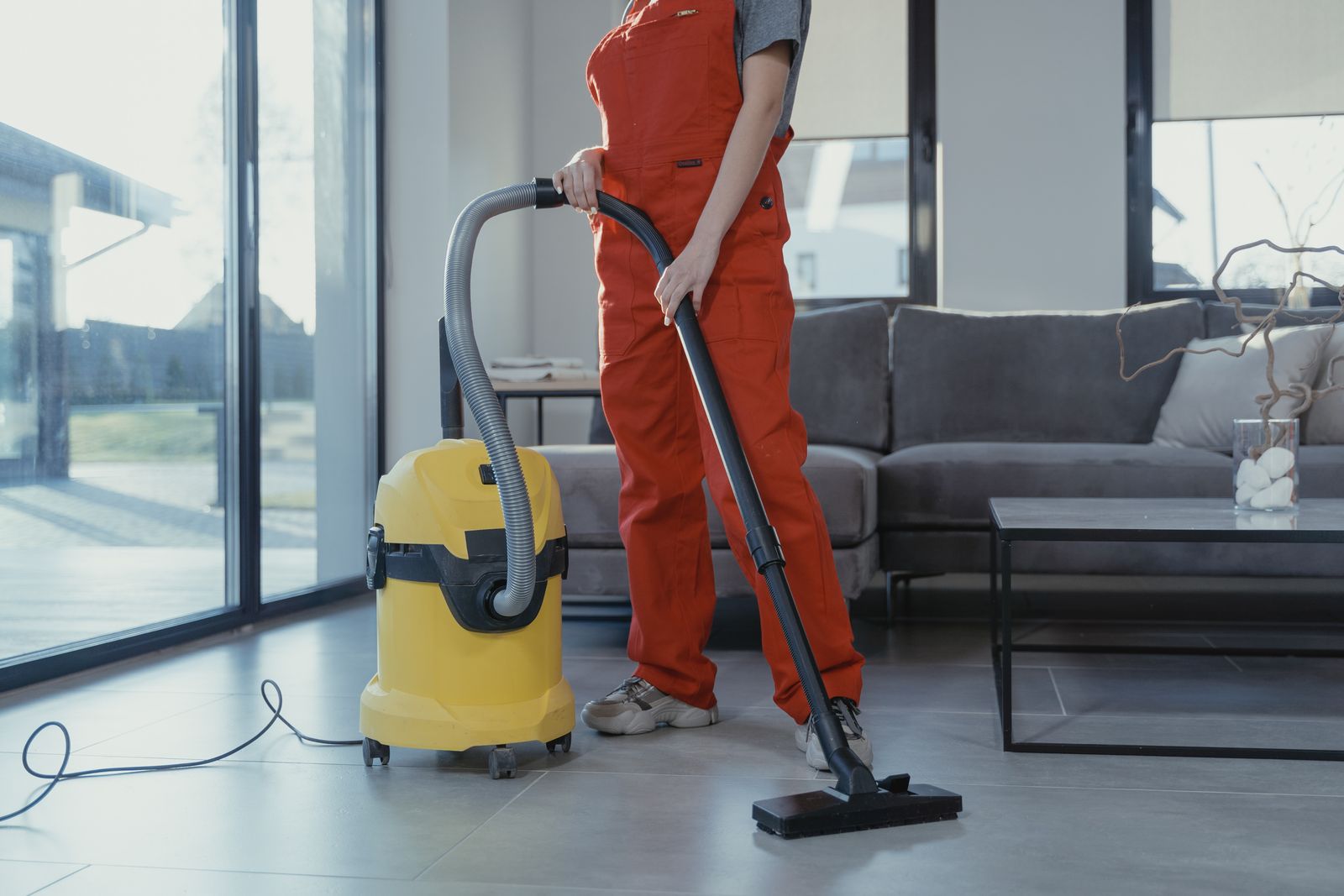
- A good vacuum (a commercial canister or backpack vacuum lasts longer than a household upright)
- Microfiber cloths in several colors (one color per area, so bathroom cloths never end up in the kitchen)
- Mop and bucket or a flat mop system
- All-purpose cleaner, glass cleaner, disinfectant, degreaser, bathroom cleaner and a stone-safe cleaner
- Scrub brushes, scrapers, a duster with extension pole, and a step stool
- Gloves and other protective gear, and labeled spray bottles
- A caddy to carry everything, and laundry bags for used cloths
Keep safety data sheets for the chemicals you use, label every bottle you refill, and never mix products like bleach and ammonia.
8. Set up booking, scheduling and payments
Early on, a phone, a calendar and invoices can work. Once you have more than a handful of recurring clients, scheduling software saves hours each week: recurring appointments, reminders to clients, checklists for each home, online booking, and card payments on file. Our guide to the best cleaning business software compares the main options, and our free invoice template works until you're ready to pay for software.
Open a business bank account from the start and run every payment through it. It makes bookkeeping and taxes far easier.
9. Get your first clients
The fastest first clients come from people who already trust you. After that, local search does most of the work:
- Tell everyone you know, and ask your first happy customers for referrals.
- Create your Google Business Profile. Cleaning is a service-area business, so you can hide your home address and list the areas you serve. Our guide to Google Business Profile for contractors applies to cleaning businesses too.
- Ask every customer for a Google review. Reviews are what people compare first. Here's how to get more Google reviews without breaking Google's rules.
- Build a simple website with your services, areas, starting prices and an easy way to book. Our contractor website checklist covers what to include.
- Partner with real estate agents and property managers for move-out cleans, and with short-term rental hosts for turnovers.
- Local Facebook groups and Nextdoor, where neighbors ask for recommendations every week.
For more ideas, see our guide to house cleaning marketing.
10. Hire your first cleaner
When you're turning down work or working every evening to keep up, it's time to hire. Decide whether your cleaners will be employees or independent contractors. The difference isn't your choice to make freely: it depends on how much control you have over how, when and where they work (and some states apply a stricter test), and getting it wrong can lead to back taxes and penalties. Most cleaning businesses that set schedules, provide supplies and train their cleaners have employees. Talk to an accountant before you hire.
For your first hire, write down your cleaning checklist room by room, train on real jobs alongside you, and check each new cleaner's work for the first few weeks. Consistency is what keeps recurring clients.
The U.S. Bureau of Labor Statistics reports median pay for maids and housekeeping cleaners of $35,510 a year in May 2025. Local wages vary widely, so check job postings in your area before you set pay.
Your cleaning business startup checklist
| Step | Done |
|---|---|
| Choose residential, commercial or specialty cleaning | ☐ |
| Check local competitors and prices | ☐ |
| Pick a business name and structure (sole proprietor or LLC) | ☐ |
| Register with your state, and file a DBA if needed | ☐ |
| Get a free EIN from the IRS | ☐ |
| Get local business license and any sales tax permit | ☐ |
| Get liability insurance (and bonding if clients ask for it) | ☐ |
| Open a business bank account | ☐ |
| Set prices from your real costs | ☐ |
| Buy supplies and equipment | ☐ |
| Set up booking, scheduling and payments | ☐ |
| Create your Google Business Profile and a simple website | ☐ |
| Ask every customer for a review and a referral | ☐ |