Roofing has a lot going for it as a business: every house needs a new roof eventually, storms create sudden demand, and a single replacement is a large ticket. It also has real risks. Work at height is dangerous, insurance is expensive, materials prices move, and the trade's reputation suffers from "storm chasers" who take deposits and disappear. The roofing companies that last are the ones that are licensed, insured, safe and easy to trust.
1. Get field and sales experience first
Most roofing owners worked on crews, as foremen or in roofing sales before starting their own company. You'll be measuring roofs, writing estimates, selling, ordering materials, scheduling crews and standing behind the workmanship; each of those is easier if you've seen it done well.
The BLS notes that most roofers learn on the job, some through apprenticeships, and that most employers require OSHA-compliant safety training. Some shingle manufacturers run contractor programs with enhanced warranty options; check each manufacturer's requirements.
2. Pick your market
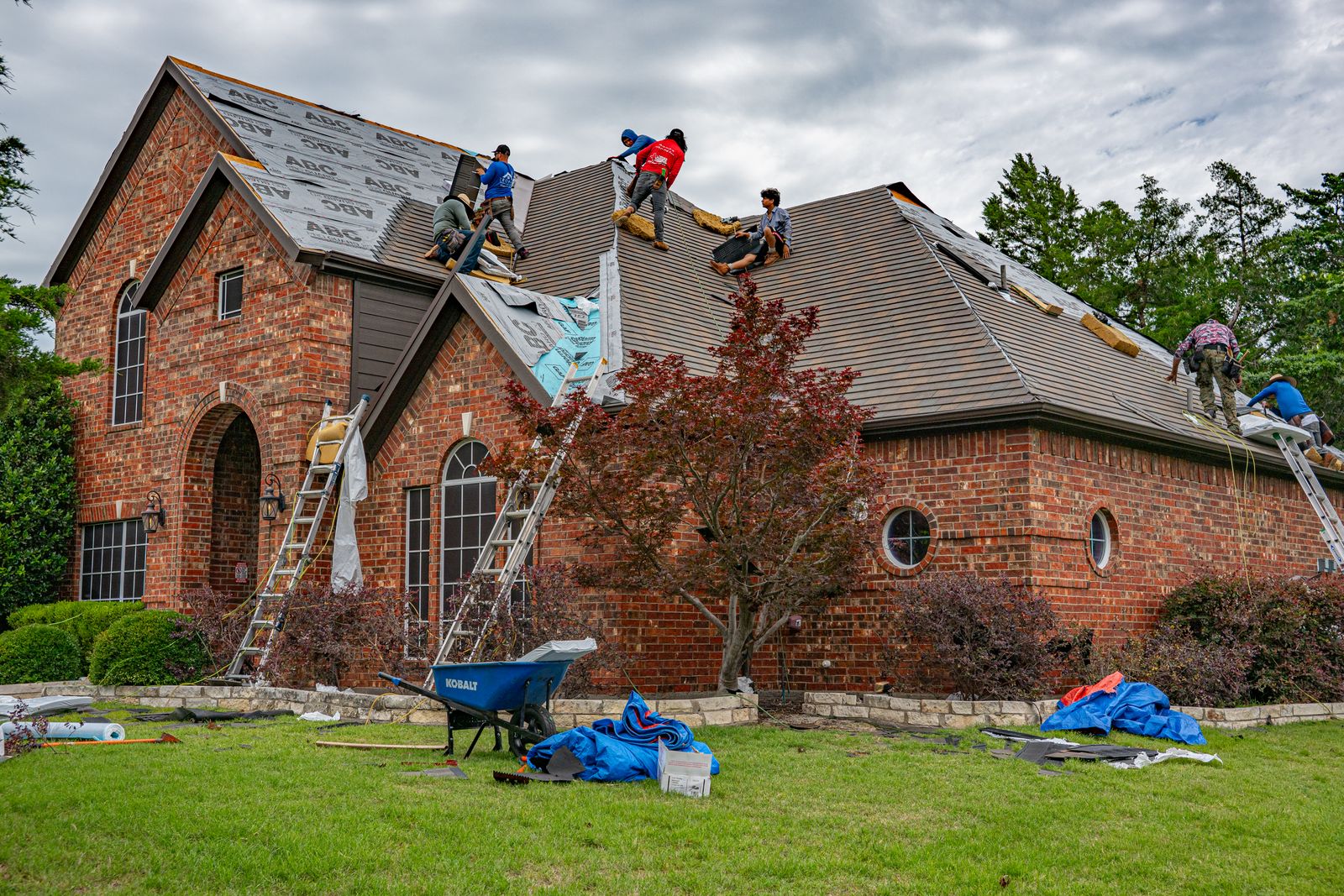
- Residential replacement: the core of most roofing businesses. High ticket, sold to homeowners, with insurance claims involved after storms.
- Residential repair: leaks, flashing, storm damage. Smaller jobs, but fast cash and a source of replacement leads.
- Commercial roofing: low-slope systems like TPO, EPDM and modified bitumen. Different skills, equipment and insurance, with bigger contracts.
- Specialties: metal, tile, slate, cedar shake, gutters and skylights. Less competition and higher prices, but specialist skills.
- Insurance restoration: storm work paid through homeowners' insurance claims. Large volume, but it comes with paperwork, slow payments and state rules about what a contractor may do in a claim.
Starting with residential repair and replacement in a defined area is the most common route.
3. Licensing: check state and local rules
Roofing licensing varies more than in most trades. Some states license roofing contractors specifically, some include roofing in a general or residential contractor license, and some leave it to cities and counties. Common requirements are:
- Years of experience and a trade exam, often with a business and law exam
- Proof of general liability and workers' compensation insurance
- A license bond or surety bond
- Local registration and building permits for each re-roof where required
If you'll work in more than one state or city, check each one. Some states also restrict what a contractor may do in a homeowner's insurance claim, for example negotiating the claim on the homeowner's behalf, so read your state's rules before you do storm work.
If you'll disturb painted surfaces such as trim, fascia or siding on homes built before 1978, the EPA's Renovation, Repair and Painting (RRP) rule may apply: firms paid to do that work must be EPA- or state-certified (including sole proprietors) and use certified renovators trained by an EPA-accredited provider in lead-safe work practices. Exterior work disturbing 20 square feet or less of paint is exempt as minor repair, but demolition of painted surfaces is always covered.
4. Register the business
- Form an entity. Given the liability in roofing, most owners form an LLC or corporation; an accountant can help you choose.
- Register with your state and file a DBA if you'll use a different business name.
- Get a free EIN from the IRS. It's issued immediately online if approved.
- Get your contractor license in the business name where required, plus local business licenses.
- Open a business bank account. Keep customer deposits and supplier payments separate from personal money.
5. Insurance and bonds
Roofing is one of the most expensive trades to insure because falls are common and claims are costly. Budget for it before you set prices:
- General liability: covers damage to the home, interior water damage from an open roof, and injuries to others. Homeowners, general contractors and property managers will ask for a certificate.
- Workers' compensation: required by state law in most states once you have employees (rules and exemptions vary by state). You'll also pay state unemployment insurance tax, and a few states require short-term disability coverage.
- Commercial auto: for trucks, trailers and dump trailers.
- Tools and equipment coverage, and a license or surety bond where required.
If you use subcontracted crews, collect their insurance certificates; if a subcontractor's worker is hurt and the subcontractor has no coverage, the claim can come back to you.
6. Safety: fall protection is not optional
OSHA requires fall protection for construction workers at 6 feet or more above a lower level. Under 29 CFR 1926.501:
OSHA defines a low-slope roof as a slope of 4 in 12 or less, and a steep roof as steeper than 4 in 12.
- Steep roofs with unprotected edges 6 feet or more up need guardrails with toeboards, safety nets or personal fall arrest systems.
- Low-slope roofs can use guardrails, safety nets, personal fall arrest, or a warning line combined with another system; on roofs 50 feet wide or less, a safety monitoring system alone is allowed.
- Residential construction must use those systems unless the employer can show they're infeasible or create a greater hazard, in which case a written fall protection plan, prepared by a qualified person specifically for that site, is required.
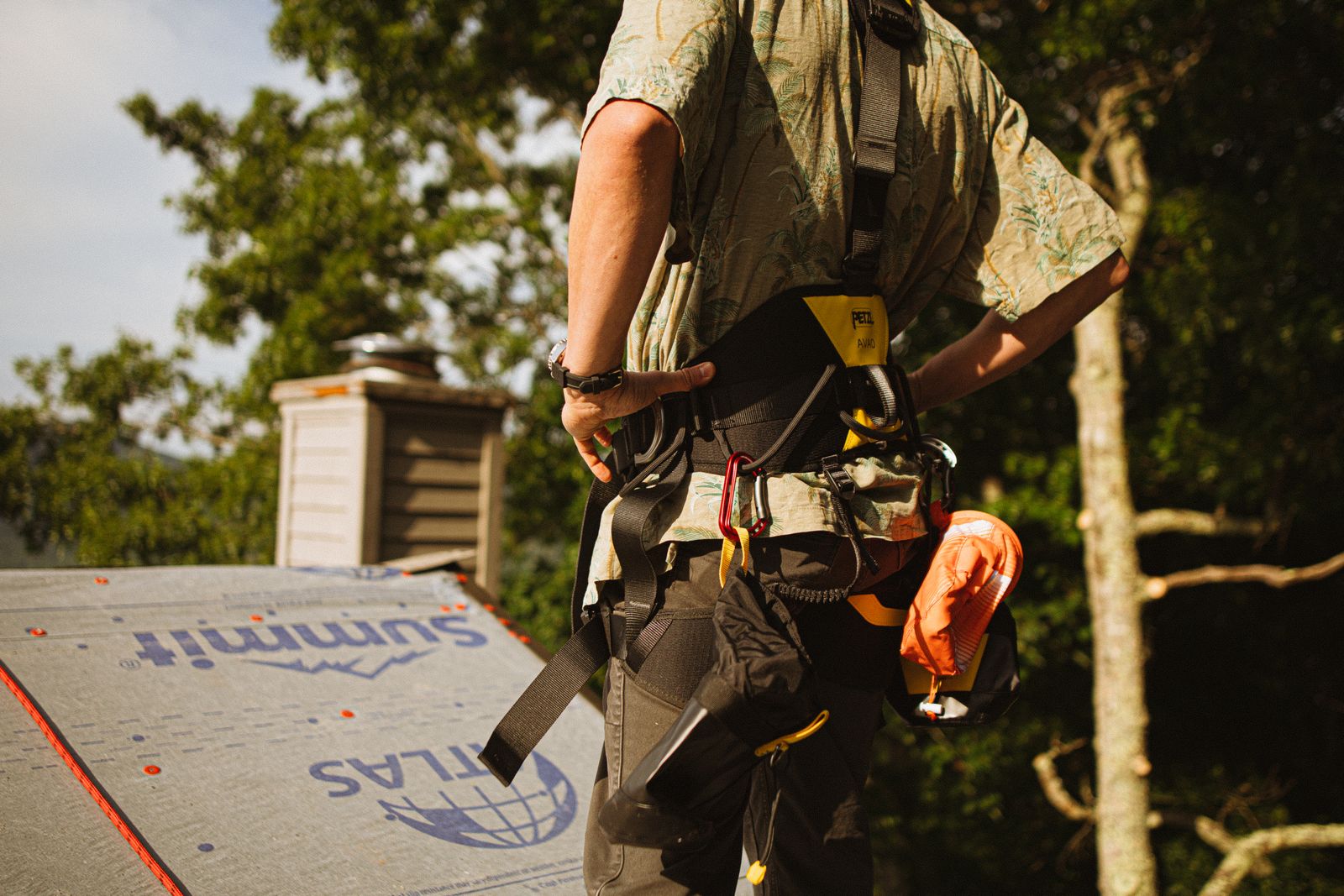
Falls are among the most common causes of serious work-related injuries and deaths. Put the harnesses, anchors, ladders and training in your startup budget, and make them part of every job.
7. Equipment, suppliers and crews
- Vehicles: a truck, a trailer or dump trailer for tear-offs, and later a lift or conveyor if you do volume.
- Tools: roofing nailers and a compressor, ladders and ladder accessories, roof jacks and planks, fall protection, tear-off tools, magnet sweepers for nails, and tarps.
- Measurement: aerial roof measurement reports or drone and app-based measuring let you quote without climbing every roof. See our guide to roofing estimate software.
- Supplier accounts: open accounts with local roofing distributors so you can buy materials per job with delivery to the roof. Good supplier relationships mean better pricing and credit terms.
- Crews: employees or subcontracted crews. The classification depends on how much control you have over the work, not on what you call them; get advice before you decide, and make sure every crew is insured and trained.
8. Estimating and pricing
Roofing jobs are usually priced per square (100 square feet of roof), adjusted for pitch, layers to tear off, complexity (valleys, dormers, skylights), access and disposal. Build every estimate from:
- Materials for the measured area plus waste, priced from your supplier
- Labor for tear-off, installation and cleanup
- Disposal (dumpsters or dump fees) and permits
- Overhead: insurance, vehicles, office, sales and marketing, warranty callbacks
- Profit
Write down exactly what's included: underlayment type, ice and water shield, flashing, ventilation, drip edge, decking replacement (and its price per sheet if needed), cleanup and warranty. Clear estimates win jobs and prevent disputes; our free contractor estimate template has scope, exclusions and payment schedule sections. When the job is done, bill it with our roofing invoice template. Check whether your state limits the deposit you can take on home improvement contracts.
9. Get your first leads
- Google Business Profile with project photos and service areas. See our Google Business Profile guide for contractors.
- Reviews from every customer; roofing customers read them closely because the job is expensive. See how to get more Google reviews.
- Yard signs on every job site. Neighbors notice roofs. Our guide to yard signs for contractors covers design and placement.
- A website with clear service pages and towns you serve; see the contractor website checklist and the roofing section of our local SEO guide for contractors.
- Paid campaigns: Facebook ads for contractors work well for roofing in many markets, and Google Local Services Ads charge per lead.
- Referral partners: real estate agents, home inspectors, insurance agents, property managers and other trades.
10. Organize the business with software
A roofing CRM tracks leads from first call to signed contract, stores measurements, photos and estimates, and keeps production on schedule. The roofing software guide linked above compares Roofr, RoofSnap and AccuLynx, including their CRM features.
Roofing business startup checklist
| Step | Done |
|---|---|
| Field and sales experience, safety training | ☐ |
| Check state and local roofing or contractor licensing | ☐ |
| Form your business entity and get an EIN | ☐ |
| General liability, workers' comp, commercial auto, bond | ☐ |
| Fall protection equipment and a safety program | ☐ |
| EPA RRP firm and renovator certification if you'll disturb paint on pre-1978 homes | ☐ |
| Truck, trailer, tools and measurement method | ☐ |
| Supplier accounts with local distributors | ☐ |
| Crews: employees or insured subcontractors | ☐ |
| Estimate template with clear scope, exclusions and payment terms | ☐ |
| Google Business Profile, website, yard signs and review requests | ☐ |
| Roofing CRM or estimating software | ☐ |